
Views: 0 Author: Site Editor Publish Time: 2026-06-10 Origin: Site
The pet aftercare industry is experiencing a profound shift today. Grieving pet owners now expect highly dignified, beautifully crafted memorials for their lifelong companions. They seek items reflecting true care and respect. Funeral homes, crematoriums, and retail distributors must meet these rising emotional expectations continuously. However, B2B operators also need reliable unit economics to stay viable in a competitive market.
Balancing high-quality craftsmanship and emotional resonance creates a unique procurement challenge. You must protect supply chain reliability and margin preservation simultaneously. Sourcing high-quality inventory involves serious logistical planning. We will explore how to build a robust procurement strategy from scratch. You will discover how to evaluate suppliers objectively using proven metrics. Finally, this guide provides a strict commercial framework for shortlisting wholesale partners. You can use these steps to source reliable products confidently.
Material diversity drives market capture: Aligning your inventory (wood, metal, ceramic, biodegradable) with specific end-customer demographics is critical for a profitable memorial pet product line.
Supplier vetting requires looking beyond unit cost: True cost includes minimum order quantities (MOQs), breakage rates, and reliable lead times.
Customization is a standard, not a luxury: The ability to scale personalized engraving and sizing dictates competitive advantage in the dog cat urn wholesale market.
Supply chain transparency mitigates risk: Domestic warehousing versus direct overseas shipping profoundly impacts inventory agility and cash flow.
Funeral homes, crematoriums, and retail distributors navigate a complex landscape. They often face highly fragmented supply chains. Vendor reliability varies drastically across regions. Inconsistent quality control plagues many direct-from-manufacturer orders. Volatile pricing in the wholesale sector makes financial forecasting difficult. Buyers must secure a memorial pet product line matching strict corporate standards. A poorly constructed vessel creates terrible customer experiences. You need a structured approach to filter out unreliable vendors quickly.
Successful procurement requires definitive benchmarks. You should establish baseline metrics before contacting any vendor.
Margin Protection: Establish sourcing structures supporting a minimum 50-70% gross margin upon retail markup. You need room to absorb occasional return costs. Wholesale pricing tiers must accommodate your specific sales volume.
Brand Reputation: Adopt a zero-tolerance policy for structural failures. Poorly threaded lids cause spills. Fragile bases scratch household furniture. These defects cause severe emotional distress to grieving families. Your reputation relies entirely on product integrity.
Turnaround Times: Require reliable inventory replenishment cycles. Stockouts of standard sizes severely damage revenue potential. Ask vendors for historical on-time delivery metrics. You need partners who ship consistently within agreed windows.
Audit your current sales data to identify top-performing price points.
Survey your staff regarding common customer complaints about past inventory.
Focusing solely on piece price while ignoring high freight charges.
Ordering bulk containers without testing lid security firsthand.
You must understand industry-standard volume calculations. The universal rule dictates 1 cubic inch of interior space per 1 lb of live weight. This formula drives your entire wholesale purchasing ratio. Most buyers make the error of overstocking massive capacities. In reality, you should stock heavily on 50–100 cubic inch capacities. This range covers most average-sized dogs and large felines.
Inventory Allocation Chart | |||
Pet Size Category | Live Weight (lbs) | Required Volume (cu. in.) | Recommended Stock Ratio |
|---|---|---|---|
Small / Feline | 0 - 30 lbs | Up to 35 cu. in. | 30% |
Medium Canine | 30 - 60 lbs | 40 - 65 cu. in. | 50% |
Large Canine | 60 - 100+ lbs | 70 - 120 cu. in. | 20% |
Matching materials to customer demographics ensures high turnover rates. Every animal cremation container serves a specific aesthetic and functional purpose. You need a diverse yet strategic mix.
Metals (Brass/Alloy): These offer exceptional durability. They suffer lower shipping breakage rates during transit. Metals appeal strongly to traditional aesthetics. They hold intricate engravings beautifully. They represent a safe, high-margin staple for any catalog.
Hardwoods (Walnut/Cherry): Wood provides natural warmth. It allows for easy personalization via laser engraving. Families appreciate the organic texture. However, wood requires stricter humidity controls in warehousing. Warping can ruin an entire pallet if stored improperly.
Ceramics & Resins: These materials allow high aesthetic customization. You can offer sculptural shapes and vibrant colors. However, ceramics demand rigorous evaluation of wholesale packaging. You must verify their drop-test ratings to prevent transit loss.
Eco-Friendly/Biodegradable: This represents a rapidly growing market segment. Consumers want water-soluble or earth-friendly options. Evaluate suppliers carefully on genuine environmental certifications. Avoid greenwashing by demanding material safety data sheets.
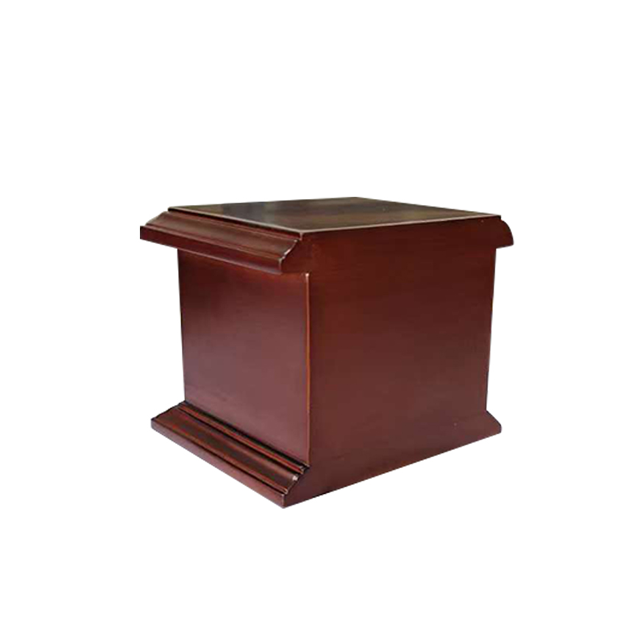
You must analyze a supplier’s discount structures carefully. True scalability means the vendor grows alongside your business. Do they support drop-shipping for initial testing? Some vendors allow single-unit shipping before requiring pallet-level commitments. This flexibility lets you test market demand safely. When you enter the dog cat urn wholesale market, ask for comprehensive pricing matrices. Understand exactly volume triggers a price break.
Never assume standard quality control exists. You must actively request transparency on manufacturing origins. Ask where facilities operate. Assess the precision of closures. Threaded metal lids must spin smoothly without catching. Press-fit wooden lids must feature secure rubber gaskets. Evaluate the safety of paints and sealants used on the pet cremation ash urn. Cheap sealants off-gas terrible odors upon unboxing. This ruins the emotional moment for the end-user.
Modern consumers demand personalization. Assess the vendor’s capacity for rapid white-labeling. Can they attach custom nameplates efficiently? Do they offer rapid-turnaround photo engraving? You need partners possessing in-house laser technology. Relying on third-party engravers adds days to lead times. Vendors providing integrated engraving services protect your margins. They also reduce the risk of shipping errors.
Direct international sourcing looks appealing on paper. Base unit prices often seem incredibly low. However, you must address the reality of overseas freight delays. Customs holds can freeze your inventory for weeks. Tariff fluctuations destroy expected profit margins overnight. Domestic wholesalers mitigate these risks entirely. They handle the importation headaches for you. You pay a slightly higher base price for immense logistical peace of mind. Evaluate whether you possess the cash reserves to handle international delays.
Transit damage happens frequently in this industry. You need a transparent Service Level Agreement (SLA). The SLA must outline items damaged in transit clearly. Who bears the cost? What exactly is the claim process? Some suppliers require photographic proof within 48 hours. Others offer no-questions-asked replacements. Favorable return policies save thousands of dollars annually. Never sign a contract lacking clear breakage stipulations.
Discuss the cash-flow implications of different inventory models. Buying case quantities secures lower per-unit costs. It requires significant upfront capital. It also demands substantial climate-controlled warehouse space. Alternatively, utilizing a wholesale partner's drop-ship program preserves capital. Drop-shipping minimizes holding costs entirely. However, it often incurs per-item handling fees. You must calculate the breakeven point between these two models carefully. Many successful businesses blend both strategies effectively.
Maintain safety stock of top three bestsellers locally.
Use drop-shipping for rare sizes or highly customized specialty items.
Failing to account for warehouse humidity, leading to ruined wood inventory.
Ignoring peak seasonal shipping delays when utilizing JIT models.
You must never place a bulk order without conducting a physical sample audit. Digital catalogs hide numerous manufacturing flaws. Order one unit of each primary material. Test the weight and heft. A heavy pet urn feels premium and respectful. A lightweight one feels cheap. Check the finish consistency under harsh lighting. Look for runs in the clear coat. Test the thread smoothness repeatedly. Turn the item upside down to verify closure security.
Evaluate the responsiveness of the B2B account manager. Send them questions regarding material safety data. Time their response. Assess whether they act as a transactional vendor or a strategic supply partner. Strategic partners suggest inventory mixes based on regional trends. Transactional vendors only process orders. You need a dedicated representative who understands your specific operational challenges.
Moving from evaluation to execution requires structured steps. Follow this sequence to establish reliable partnerships:
Define your immediate inventory gaps: Review your last six months of sales data. Identify which sizes or materials frequently sold out.
Request wholesale documentation: Ask for a comprehensive wholesale catalog. Request specific MOQ pricing tiers from 3-4 vetted suppliers.
Order a mixed-material sample pack: Secure physical items. Conduct your internal audit. Share the samples with your frontline staff for feedback.
Negotiate the SLA: Finalize breakage policies and shipping guarantees before signing any purchase order.
Successful procurement in the pet aftercare space requires strict discipline. It hinges on a clinical evaluation of supply chain mechanics. You must pair this data-driven approach with a deep understanding of end-user empathy. Grieving families deserve flawless memorial products. Businesses deserve reliable, profitable operations.
Remember, the lowest wholesale price often brings hidden dangers. High defect rates or slow shipping quickly erase upfront savings. Prioritize structural integrity and reliable turnaround times above aggressive discounts. Clear SLAs and physical sample audits remain your best defense against poor inventory.
Now is the time to optimize your procurement strategy. Review your current inventory turnover metrics today. Identify your most profitable categories and glaring stock gaps. Reach out to a qualified wholesale partner and begin the sample request process immediately.
A: MOQs vary widely across the industry. Domestic distributors typically offer smaller case packs ranging from 4 to 12 units. This allows for easier inventory management. Direct overseas manufacturers often require MOQs of 100 or more units per SKU to qualify for significant wholesale discounts.
A: Base your assortment on standard pet sizes. Allocate roughly 30% to Small/Feline (0-30 lbs), 50% to Medium (30-60 lbs), and 20% to Large (60-100+ lbs). Stocking heavily in the medium capacity range prevents dead inventory while covering the most common consumer requests.
A: Yes, many specialized distributors offer white-label drop-shipping services. However, this convenience usually incurs a per-item handling fee. While it preserves your initial capital, these fees impact your overall profit margins compared to traditional bulk purchasing and internal fulfillment.
A: You should demand individual retail-ready boxing. Look for precise molded foam inserts or high-quality bubble wrap. Proper packaging prevents B2B transit damage entirely. It also ensures a highly presentable, respectful unboxing experience for the grieving end consumer.
