

Views: 0 Author: Site Editor Publish Time: 2025-11-04 Origin: Site


Columbarium niches offer a dignified and space-efficient solution for the interment of cremated remains. As cremation becomes an increasingly popular choice for memorialization across the world, understanding the various materials, styles, and layout options of columbarium niches is essential. These factors not only affect the aesthetic and cultural value of the memorial but also determine its durability, maintenance requirements, and compatibility with the surrounding environment. Choosing the right columbarium niche is a deeply personal decision, one that balances respect, practicality, and long-term considerations. This article provides a detailed overview to guide families, architects, and cemetery planners through the options available.
A columbarium niche is a compartment or space within a columbarium—a structure designed to house cremation urns. The word “columbarium” is derived from the Latin word columba, meaning “dove,” historically symbolizing peace and the soul’s journey. These niches serve as a permanent resting place for the cremated remains of individuals, offering families a location for remembrance that is both accessible and organized.
Unlike traditional burial plots, columbarium niches allow for more compact and organized interment solutions, making them particularly suitable for urban areas where land availability is limited. In addition, they reduce environmental impact, as they do not require large tracts of land or extensive landscaping, making them a more sustainable choice for modern cemeteries and memorial spaces. Columbarium niches can be found in indoor settings such as mausoleums, crematoriums, or memorial halls, as well as in outdoor gardens, parks, or specially designated cemetery areas.
Columbarium niches vary widely in size, material, and design, providing families with flexibility to choose options that align with personal preferences, cultural traditions, and religious beliefs. They can range from small, single-urn compartments to larger multi-urn units that accommodate multiple family members.
The choice of material for a columbarium niche has a direct impact on its durability, maintenance requirements, visual appeal, and cost. The materials selected must withstand environmental conditions if placed outdoors, resist wear over time, and reflect the aesthetic and symbolic values desired by the family or community. Below are the most common materials used for columbarium niches:
Granite: Granite is renowned for its exceptional durability and resistance to weathering, making it suitable for both indoor and outdoor installations. Its natural mineral composition allows for a wide variety of colors and patterns, including black, gray, red, and speckled varieties, which can be polished or honed to achieve different surface finishes. Granite is resistant to scratches, fading, and moisture, which ensures that engraved inscriptions remain legible over decades. Its weight and solidity convey permanence and stability, qualities often associated with memorials.
Marble: Marble offers a timeless elegance with its smooth, polished surface and subtle veining. While not as hard as granite, it remains a preferred choice for interior niches where environmental exposure is limited. Marble's natural beauty adds a refined, classical appearance to memorial spaces and can be easily engraved with decorative motifs or inscriptions.
Limestone and Sandstone: These stones provide softer, earthier textures and colors. They are often selected for their natural warmth and aesthetic appeal, although they require periodic maintenance to prevent erosion and surface damage over long periods.
Bronze: Bronze is frequently used for niche doors, front panels, or decorative plaques. Its natural patina over time enhances the character of the niche, giving it a rich, aged appearance. Bronze is highly durable, resistant to corrosion, and can be engraved with precise inscriptions, symbols, or motifs.
Stainless Steel: Stainless steel is widely appreciated for its modern look, strength, and resistance to rust. It is suitable for both indoor and outdoor installations, particularly in regions with high humidity or precipitation. Its sleek, reflective surface allows it to blend with contemporary architectural styles.
Aluminum and Other Alloys: Lightweight metals like aluminum are sometimes used for decorative features or modular niche doors. These metals can be anodized or coated to achieve a variety of finishes and colors while maintaining long-term durability.
Concrete: Concrete is a cost-effective and versatile material for columbarium niches. It can be molded into various sizes, shapes, and textures to match the design requirements of the space. Concrete is particularly useful for large-scale outdoor columbariums where structural strength is essential.
Precast Concrete: Precast concrete niches are manufactured in controlled environments, ensuring consistent quality and precision in dimensions. Once produced, they can be transported and assembled on-site, offering faster installation times and reduced labor costs. Precast units are often modular, allowing for flexible expansion of columbarium structures as future interments are added.
Glass Front Niches: Glass allows for the display of urns, photographs, and personal mementos, creating an intimate and personalized memorial. Options include clear, frosted, etched, or colored glass, and they can be combined with metal or stone frames for added stability. Glass niches are particularly suitable for indoor columbariums, providing visibility while maintaining a protective barrier around the urn.
Tempered and Laminated Glass: These types of glass offer enhanced strength and safety, preventing shattering and protecting the contents of the niche. Glass can also be backlit to create a visually striking display, enhancing the overall ambiance of the memorial space.
Wood: Though less common for long-term outdoor use, wood can be used for interior paneling or decorative doors. Species such as oak, cherry, or maple provide a natural warmth and aesthetic appeal, though they require careful maintenance to prevent degradation.
Composite Materials: Engineered materials combine durability, resistance to moisture, and low maintenance requirements. They can replicate the appearance of wood or stone while offering enhanced longevity and structural stability. Composites are ideal for environments where maintenance access may be limited or where specific aesthetic requirements are desired.
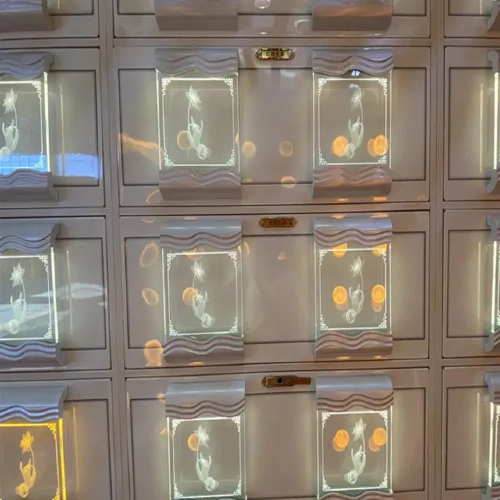
Columbarium niches can reflect a wide array of styles, ranging from traditional to contemporary, and can be further personalized to meet individual or cultural preferences.
Classic Designs: Traditional niches often feature symmetrical layouts, intricate carvings, columns, or arches. These designs evoke a sense of timelessness and reverence, often associated with classical architecture and historical cemeteries.
Religious Symbols: Traditional niches may incorporate religious motifs such as crosses, angels, or spiritual inscriptions, reflecting the faith of the deceased and offering symbolic comfort to visiting family members. These elements can be carved, engraved, or applied as decorative panels.
Minimalist Designs: Modern niches favor clean lines, geometric shapes, and uncluttered surfaces. They often utilize materials such as polished stone, glass, or metal to create sleek and contemporary appearances.
Innovative Materials: Modern niches can combine multiple materials, such as glass fronts with metal frames or stone panels, creating visually striking designs that integrate with the architecture of urban mausoleums or indoor memorial halls.
Integrated Lighting: Some modern designs incorporate LED or ambient lighting, enhancing the visibility of inscriptions and creating a calming environment for visitors.
Engravings and Inscriptions: Personalized engravings, including names, dates, quotes, or symbols, allow families to commemorate their loved ones uniquely. Advanced engraving technologies enable precise detailing even on hard surfaces such as granite or metal.
Artwork and Imagery: Niches can incorporate artwork, images, or personal mementos behind glass panels, providing a deeply personalized experience. Families can select themes, patterns, or symbols that reflect the personality, beliefs, or passions of the deceased.
Interactive Features: Some modern niches include QR codes or digital plaques, enabling visitors to access multimedia content such as photos, videos, or stories about the deceased.
The spatial arrangement of niches affects accessibility, maintenance, and overall aesthetics. Selecting the right layout ensures that the columbarium remains organized, respectful, and adaptable for future use.
Single Niche Units: These units are typically mounted on walls and accommodate individual urns. They are ideal for indoor columbariums or areas with limited horizontal space.
Multi-Niche Units: Groups of niches arranged in vertical or horizontal configurations allow families to inter multiple urns together. This layout can optimize space while maintaining an organized appearance.
Outdoor Columbariums: These structures can vary in height and width, often forming garden-style memorial walls or standalone monuments. Outdoor columbariums provide a serene environment for reflection and ceremonies, while incorporating landscaping elements such as walkways, benches, and greenery.
Indoor Columbariums: Placed within buildings, these structures provide a controlled environment for protection from weather elements, enabling the use of materials such as wood, glass, and delicate metals that might otherwise deteriorate outdoors.
Modular Units: Pre-fabricated modules can be combined to create larger columbarium structures, offering scalability for growing memorial spaces. Modules can be added over time without disrupting existing interments.
Stackable Niches: Vertical stacking allows for high-density columbarium designs, maximizing available space, particularly in urban cemeteries or mausoleums with limited land availability.
Table: Comparison of Layout Options
Layout Type | Space Efficiency | Flexibility | Ideal Location | Maintenance Requirement |
Wall-Mounted | Medium | Moderate | Indoor/Small Spaces | Low-Medium |
Free-Standing | Low-Medium | Low | Outdoor/Garden | Medium-High |
Modular | High | High | Indoor/Outdoor | Medium |
Stackable | Very High | Moderate | Urban Cemeteries | Medium |
Selecting the appropriate columbarium niche involves careful consideration of multiple factors:
Material Durability: Materials must withstand the environmental conditions of the installation site, including temperature fluctuations, humidity, UV exposure, and potential physical impacts.
Aesthetic Preferences: Families should consider the overall design and appearance of the columbarium niche, ensuring that it complements the surrounding architecture or landscape.
Location: Indoor versus outdoor placement affects material selection, maintenance requirements, and protection from environmental factors. Indoor niches allow for more delicate or decorative materials, while outdoor niches require resilient, weather-resistant materials.
Budget: Consider the initial cost, as well as long-term maintenance and potential expansion. Investing in high-quality materials can reduce future maintenance and ensure longevity.
Accessibility: Ease of access for family members is essential. Niches should be positioned to allow for comfortable visitation while adhering to cemetery or facility regulations.
Cultural and Religious Considerations: Ensure that the niche design, layout, and inscriptions align with the cultural or religious practices of the family and community.
Columbarium niches offer a respectful, organized, and sustainable alternative to traditional burial. By exploring the various materials, styles, and layout options, families can make informed decisions that honor their loved ones while considering space, durability, and aesthetics. Whether you are interested in classic stone designs, modern glass-front niches, or modular stackable configurations, careful planning ensures a meaningful and lasting memorial. To explore a wide range of high-quality columbarium niches and receive expert guidance tailored to your needs, consider visiting Jiangxi Dongsheng Intelligent Equipment Group. Their team of professionals can help you select the ideal solution and provide personalized support for creating a dignified and lasting tribute.
What is a columbarium niche?
A columbarium niche is a compartment within a columbarium designed to house cremation urns in an organized and respectful manner.
What materials are commonly used for columbarium niches?
Common materials include granite, marble, bronze, stainless steel, concrete, glass, wood, and composite materials.
Can I personalize a columbarium niche?
Yes, many columbarium niches offer options for personalized engravings, photos, artwork, and even digital elements.
Are there different styles of columbarium niches?
Yes, styles range from traditional classical designs to modern minimalist and fully customized personalized niches.
What layout options are available for columbarium niches?
Available layouts include wall-mounted, free-standing, modular, and stackable configurations.
How do I choose the right columbarium niche?
Consider factors such as durability, material, design, layout, budget, and alignment with cultural or religious preferences.


