
Views: 0 Author: Site Editor Publish Time: 2026-06-12 Origin: Site
Selecting a final resting vessel carries immense emotional weight for any family. You want to honor a loved one beautifully during a difficult grieving period. However, practical challenges often complicate this deeply personal choice. Buyers must balance elegant aesthetic tributes against rigid sizing rules. You also have to navigate long-term material durability and strict facility security requirements. This guide offers a straightforward, evidence-based framework. It will help you evaluate and select an adult cremation urn effectively. We prioritize industry standards alongside your specific emotional needs. You will learn exactly how to calculate proper cubic capacity and assess material longevity. We will also cover essential sealing mechanics and TSA air travel compliance. Finally, you will discover how to blend these vessels naturally into your existing home decor.
Standard adult cremation urns require a minimum capacity of 200 cubic inches, based on the industry-standard 1-to-1 ratio (one cubic inch per pound of healthy body weight).
Material selection directly impacts placement viability—ceramics and glass excel in home displays, while metals and hardwoods offer superior durability for transport or columbarium placement.
Secure closure mechanisms (threaded lids vs. adhesive-sealed panels) are critical evaluation points to prevent accidental spillage.
A handcrafted cremation container can double as a memorial art piece, integrating discreetly into residential decor.
The funeral industry relies on specific mathematical formulas for sizing resting vessels. You must understand these baseline rules before making a purchase. The most critical standard remains the 1:1 capacity rule. Funeral homes calculate one cubic inch of internal space for every one pound of healthy body weight. This universal formula ensures the ashes fit securely inside the chosen human urn.
Standard adult capacity typically ranges between 200 and 220 cubic inches. This specific volume accommodates the vast majority of adult individuals safely. However, extra-large options do exist in the marketplace. These larger vessels hold up to 300 cubic inches or more. You need these expanded sizes for individuals weighing over 220 pounds prior to passing. Bone density ultimately determines ash volume, but pre-cremation weight serves as the safest proxy measurement.
Many buyers face a severe implementation risk during the selection process. They often choose a product based purely on exterior visual dimensions. A large decorative outer shell does not guarantee sufficient internal volume. Failing to verify cubic capacity leads to the trauma of insufficient space. You never want to discover the ashes do not fit during the sensitive transfer process.
Ignoring the thickness of the vessel walls when estimating space.
Assuming all standard products hold 200 cubic inches uniformly.
Forgetting to account for the space taken up by the internal plastic bag.
Sometimes you will encounter atypical sizing scenarios. Families often divide ashes among several relatives. In these cases, you divide the total required cubic inches by the number of intended recipients. Smaller "keepsake" sizes work perfectly for split ashes. Single-vessel containment requires strict adherence to the baseline adult requirements. Always double-check your math before authorizing a final purchase.
Pre-Cremation Weight (lbs) | Minimum Required Capacity (Cubic Inches) | Recommended Size Category |
|---|---|---|
Up to 150 lbs | 150 cu in | Standard Adult |
151 - 200 lbs | 200 cu in | Standard Adult |
201 - 250 lbs | 250 cu in | Extra-Large Adult |
251 - 300+ lbs | 300+ cu in | Oversized / Companion |
Material selection dictates where you can safely place the vessel long-term. Each material type offers distinct advantages and inherent physical vulnerabilities. You must align the material composition with your intended resting location.
Hardwoods like rosewood, mahogany, and walnut provide immense warmth. They deliver a deeply traditional visual appeal. They serve as an excellent foundation for a handcrafted cremation container. Many natural wood options are fully biodegradable. This characteristic makes them ideal for green earth burials. However, wood remains highly susceptible to moisture damage. It can warp or crack over time if not properly sealed or kept in climate-controlled spaces.
Metals such as aluminum, stainless steel, and brass deliver exceptionally high durability. They often feature highly secure threaded closures. Aluminum remains lightweight and very easy to transport. Brass feels substantial and heavily anchored. The primary downside is visual aesthetics. Unadorned metal can look overly utilitarian or industrial. Manufacturers often rely on heavy engraving or colorful enameling to soften the outward appearance.
Ceramics and porcelain carry immense artistic value. They offer unique artisanal variations across every single piece. No two fired pieces ever look exactly alike. Unfortunately, inherent fragility limits their practical application. They are entirely unsuitable for high-traffic household areas. You should never choose ceramic for frequent transport or shipment.
We highly recommend feature-to-outcome mapping during your selection process. You should deliberately match the base material to the final destination. Choose metal for frequent relocation or burial in harsh soil. Select ceramic for a dedicated, undisturbed home mantelpiece. Opt for sealed hardwood if you plan to use a dry cemetery columbarium niche.
Material Feature-to-Outcome Comparison Chart | |||
Material Category | Core Advantage (Pros) | Core Vulnerability (Cons) | Ideal Placement Destination |
|---|---|---|---|
Hardwood (Walnut, Rosewood) | Warm aesthetics; biodegradable options | Susceptible to humidity and warping | Dry columbarium niche; green burial |
Metal (Brass, Aluminum) | Maximum durability; secure threaded lids | Can appear cold or overly utilitarian | Frequent transport; earth vault burial |
Ceramic & Porcelain | High artistic value; unique artisanal finish | High fragility; chips easily upon impact | Secure home mantel; low-traffic display |
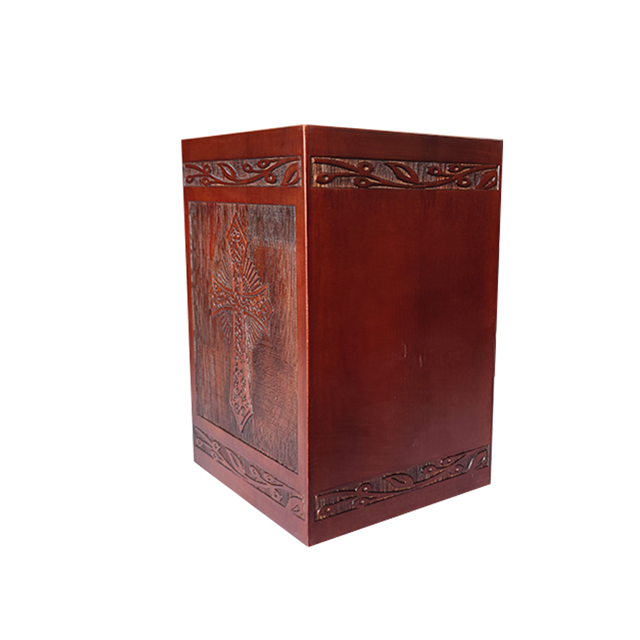
Protecting the enclosed remains requires careful attention to closure mechanics. Top-loading designs often use threaded lids or simple friction fits. Threaded metal lids offer superior, self-locking security. Bottom-loading designs typically rely on screw-secured base panels. These flat panels provide a seamless, unblemished top surface. They are highly common in wood and cultured marble product lines.
Regardless of the exterior material, spill-proofing is absolutely mandatory. You should always use a heavy-duty plastic inner bag. Secure this bag tightly using a zip tie inside the main vessel. This hidden internal layer acts as your primary defense against accidental spillage. If the outer shell cracks during a fall, the inner bag preserves the ashes intact.
Sealing protocols vary based on material type and permanence goals. Temporary closures work perfectly if you plan to scatter ashes later. Permanent sealants ensure lifelong security against tampering or accidents. You can apply drops of epoxy or silicone around threaded lids for a permanent hold. Ceramic pieces fundamentally lack threaded closures. They usually require strong commercial adhesive to secure the resting lid properly.
Air travel introduces complex compliance realities for grieving families. The Transportation Security Administration (TSA) enforces extremely strict screening protocols. Travelers must use scannable materials for airport security checkpoints. Acceptable scannable materials include wood, plastic, and non-lead ceramic. Thick metal containers will almost never pass X-ray screening.
Never attempt to carry a lead-lined or thick brass container onto an airplane.
Always carry the official death certificate and cremation certificate during travel.
Understand TSA agents are strictly prohibited from opening a sealed vessel to check contents manually.
If the X-ray cannot penetrate the exterior material, the container cannot fly under any circumstances.
The funeral industry has witnessed a massive design shift recently. Modern buyers increasingly prefer highly decorative pieces over traditional models. Distinctively "funeral" designs often feel out of place in modern living rooms. Today, many vessels deliberately mimic high-end vases or abstract tabletop sculptures. This evolution allows families to honor loved ones without altering their existing home aesthetics.
Visual discretion plays a major role in residential display decisions. A finely crafted memorial art urn blends seamlessly into surrounding decor. Handcrafted elements allow the vessel to sit naturally on living room bookshelves. They look perfectly at home on fireplace mantels or inside glass curio cabinets. Guests often admire the craftsmanship without immediately recognizing its primary function. This profound visual discretion offers immense comfort and privacy to grieving families.
You must account for specific environmental considerations when displaying these delicate pieces. Protect the vessel from direct, prolonged sunlight exposure. Intense UV rays can severely fade stained woods. Daily sunlight also damages delicate enamels and painted ceramics over time. Avoid high-humidity zones entirely.
Bathrooms and unheated sunrooms fluctuate drastically in ambient temperature. This airborne moisture degrades wood joints rapidly. Humidity also weakens certain temporary adhesives used on ceramic lids. Always choose a stable, climate-controlled interior room for permanent residential display. A shaded library shelf or an interior hallway table serves as an optimal location.
Following a structured purchasing process reduces unnecessary stress. It also eliminates costly sizing or compliance errors. Use this four-step framework to secure your ideal funeral memorial product confidently.
Step 1: Verify Requirements with Handlers. Confirm specific dimension restrictions before shopping. Columbarium niches and cemetery vaults have rigid interior space limits. A vessel half an inch too tall simply will not fit. Ask the cemetery director for exact maximum dimensions. Get these measurements in writing to guide your subsequent search.
Step 2: Establish the Budget Range. You must outline typical cost expectations early on. Mass-produced items provide budget-friendly reliability. Individually handcrafted pieces command higher prices due to intensive artisan labor. Avoid inflated funeral home markups by researching online vendors. Independent retailers often provide identical quality at significantly lower price points.
Step 3: Personalization Timelines. Customization extends the delivery schedule considerably. Factor in the additional time required for custom engraving. Nameplates, bespoke color finishes, and laser-etched photos take extra time to produce. Clarify lead times with the vendor if you have a scheduled memorial service. Rush shipping only speeds up transit time, not production delays.
Step 4: Fulfillment and Transfer. Understand your legal consumer rights regarding fulfillment. In the United States, the FTC Funeral Rule protects your purchasing choices. You have the explicit legal right to purchase from a third-party vendor. The funeral home cannot refuse your third-party vessel. They must fill it at no extra charge. They cannot force you to buy their expensive in-house inventory.
By strictly following these four steps, you protect yourself from aggressive upselling. You also guarantee the final product meets both the cemetery regulations and your family budget. Thorough preparation transforms a daunting task into a manageable checklist.
Selecting a final resting place remains a definitive, unhurried decision. You must carefully balance technical capacity limits, material science, and your desire for personal tribute. Let hard data guide your initial filtering process. Prioritize the internal volume and sealing mechanics above all else. Once you satisfy the critical structural requirements, filter the remaining options by your aesthetic preferences. Confirm your columbarium dimensions today to establish a clear baseline. Then, explore independent artisans to find a design truly worthy of your loved one's legacy. Taking these calculated steps ensures a beautiful, compliant, and highly secure memorial for generations.
A: No. Under the FTC Funeral Rule in the United States, you possess the legal right to purchase from any third-party vendor. Funeral homes cannot refuse to handle a compliant container you provide. They also cannot charge an extra fee to transfer ashes into a vessel purchased elsewhere.
A: You should rarely pour loose ashes directly into the container. Crematoriums typically return ashes sealed inside a thick plastic bag. You simply transfer this entire sealed bag into the new vessel. If you feel uncomfortable doing this yourself, request the crematorium or funeral director handle the transfer.
A: No. TSA approval depends entirely on the material's ability to pass through an X-ray machine. Wood, plastic, and non-lead ceramics are generally scannable. Thick metals like bronze or brass block X-rays. If agents cannot verify the contents via scanning, they will deny the item through security.
A: If the volume exceeds capacity, do not attempt to force the ashes. You can purchase a secondary "keepsake" container for the remaining portion. Alternatively, you can scatter the excess ashes in a meaningful location. Always use the 1:1 capacity rule beforehand to prevent this sizing issue entirely.
