
Views: 0 Author: Site Editor Publish Time: 2026-06-25 Origin: Site
Client demand for green end-of-life options is shifting from niche requests to everyday expectations. Environmental awareness continuously drives this major transition across the funeral industry. Modern families actively seek choices honoring their loved ones and the earth equally. They read articles concerning forestry depletion and chemical soil runoff. Funeral directors face a delicate balancing act to meet this rising consumer demand alongside daily operational realities. You must find a biodegradable coffin ensuring absolute dignity for grieving families. It also needs to comply seamlessly with stringent crematory standards and keep the business healthy. Traditional veneer boxes often fall short of modern ecological standards. Corrugated paper coffins offer a highly efficient, structurally sound, and scalable solution for modern cremation services. You can achieve excellent outcomes provided your team understands how to evaluate product quality properly. Success ultimately relies on positioning these eco-friendly vessels correctly and transparently to families. Offering these choices demonstrates immense respect for evolving generational values.
Market Alignment: Integrating a high-quality cardboard casket for funeral services captures the growing eco-conscious demographic.
Operational Efficiency: Flat-packed corrugated paper coffins reduce storage overhead and integrate seamlessly into direct cremation workflows.
Compliance & Safety: Reputable sustainable burial containers are engineered to exceed standard weight-bearing requirements while burning cleaner than traditional MDF or varnished wood.
Family Perception: Overcoming the "cheap" stigma requires framing the choice around environmental impact, clean cremation, and customization, rather than just cost savings.
Public opinion is changing rapidly across generations. People on social media and community forums discuss the environmental toll of traditional burial methods. Embalming fluids and heavy varnished wood raise serious ecological concerns. Modern families want gentler alternatives for their final farewells. They actively question heavy resource usage associated with conventional caskets. Directors observing these trends recognize a fundamental shift in basic consumer expectations. The industry must pivot accordingly to serve communities better. Ignoring these requests pushes families toward more progressive service providers.
Direct cremation continues to rise across almost all geographic regions. This overwhelming trend creates a natural need for combustible, low-emission containers. Standard wooden boxes often burn quite inefficiently. They leave behind residues requiring extensive cleanup. A specialized paper product burns much cleaner during the process. Crematory operators appreciate materials generating minimal ash. They require less fuel to consume completely. Efficiency at the retort level directly benefits daily scheduling and operational flow.
Funeral homes must adapt service structures to survive these shifts. Offering a tiered range of biodegradable options captures otherwise lost revenue. Some families default to the absolute bare minimum alternative container simply because they lack better choices. Giving them dignified green choices changes this trajectory completely. You provide measurable environmental value. The home simultaneously maintains healthy operational margins. Providing structured tiers ensures every family finds an appropriate, meaningful vessel.
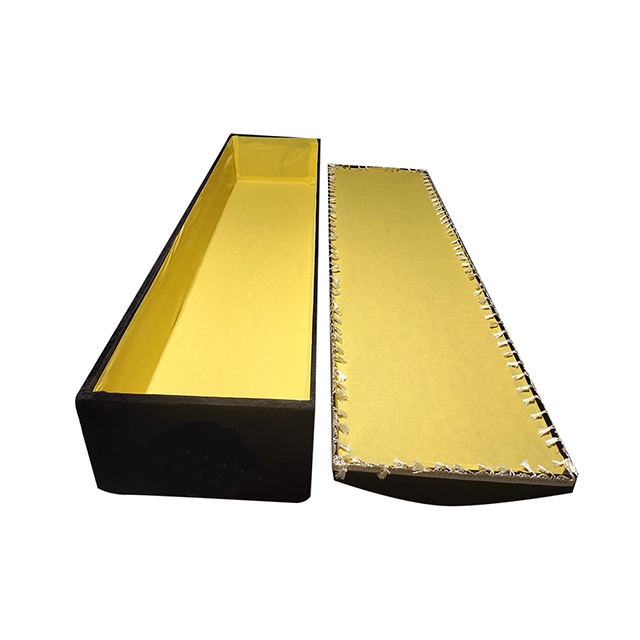
Standard commercial cardboard falls extremely short for human remains. Engineered corrugated kraft paper acts vastly differently under physical stress. It uses dense, multi-layered fluting for superior structural integrity. The paper fibers interlock to resist crushing and bending forces. You must recognize these critical material distinctions before updating inventory. Using retail-grade boxes invites disastrous operational failures. Professional vessels undergo specific manufacturing processes to handle significant static loads safely.
Chart: Material Property Comparison | ||
Feature | Commercial Cardboard | Engineered Kraft Paper |
|---|---|---|
Flute Density | Low (Single Wall) | High (Double/Triple Wall) |
Moisture Resistance | None | Plant-Based Wax Coating |
Intended Use | Retail Packaging | Human Remains Handling |
Operational fear often centers directly on bottom failure. Moving a deceased individual requires absolute confidence in the selected vessel. You cannot risk a structural collapse during facility transport. Quality paper options undergo rigorous mechanical testing protocols. They easily support weight thresholds ranging from 250 to 300 pounds. Manufacturers achieve this impressive strength through reinforced base construction. Double-walled bases distribute weight evenly across the entire structural footprint. Interlocking tabs add further rigidity to the critical stress corners.
Weight Limit Guidelines for Engineered Paper Units | ||
Unit Type | Suggested Max Load | Base Construction |
|---|---|---|
Standard Adult | Up to 250 lbs | Double-wall corrugated |
Heavy-Duty / Bariatric | 300 - 350 lbs | Triple-wall reinforced |
Refrigeration presents another significant operational challenge. Standard cardboard warps and degrades when exposed to cold moisture. Engineered paper alternatives address this specific issue directly. They feature specialized natural coatings applied during the manufacturing phase. These plant-based waxes prevent moisture absorption in standard refrigeration environments. You must understand realistic physical limits regarding these materials. Prolonged exposure to standing water will eventually weaken the cellulose structure. However, standard holding periods pose absolutely no threat to structural integrity.
Space remains a premium constraint for many modern funeral homes. Traditional caskets require massive showrooms and expansive storage facilities. Flat-pack delivery solves this logistical headache immediately. You can store dozens of units in the footprint of one traditional wooden box. This efficiency frees up valuable back-room real estate. Staff assembly requires minimal training. Modern designs utilize highly intuitive tab-and-slot mechanisms. Your team can assemble a unit fully in under ten minutes. Watch out for complex designs requiring external tape or industrial staples.
Traditional veneered wood creates significant air emissions during active combustion. Particleboard releases volatile organic compounds due to heavy industrial adhesives. Environmental regulations continually grow stricter regarding crematory exhaust outputs. Paper-based units produce significantly lower emissions overall. They burn exceptionally hot and clean. They generate almost zero toxic off-gassing during the primary ignition cycle. Operators face fewer regulatory hurdles when burning pure cellulose fibers. Facility air quality improves noticeably.
Ash management requires extensive time and physical labor. Sweeping cremains often uncovers leftover staples, metal hinges, and dense wood ash. Minimal residue from these natural options streamlines this entire workflow. Staff spend considerably less time sweeping the retort floor. Clean processing significantly reduces overall crematory equipment wear. Less downtime for refractory maintenance translates to smoother daily operations. You prolong the lifespan of expensive filtration systems.
Funeral homes must proactively verify local operating guidelines continually. A reliable cardboard casket for funeral use must lack toxic industrial glues. It should contain no metal staples or synthetic lining fabrics. Crematory associations update their accepted materials lists frequently based on new data. Checking these specific parameters ensures smooth acceptance at third-party crematory facilities. Building strong facility relationships relies on providing compliant, safe materials consistently. Reject any products featuring plastic handles or metallic decorative trim.
Directors often hesitate to present paper options initially. They fear families will perceive them as undignified or grossly inadequate. Providing solid frameworks for these conversations changes the dynamic entirely. Frame the discussion entirely around profound environmental stewardship. Emphasize the clean, natural cremation process achieved by pure materials. Explain the beautiful concept of returning gently to the earth. When you focus on environmental purpose, families stop seeing a compromise. They see a deliberate, honorable choice reflecting modern values.
Traditional models offer very little room for personal expression. Blank paper surfaces invite profound creativity and healing. Children and grandchildren can paint the exterior directly. Relatives can write personal memories or final messages on the lid. This transforms a basic container into a deeply personalized memorial artifact. You offer a highly interactive grieving experience. Families deeply appreciate this hands-on involvement during difficult transitional times. It turns an ordinary vessel into a canvas of love.
Advise your team on structuring cohesive, attractive service offerings. Bundle the eco-friendly vessel into comprehensive green cremation packages. Offer complete eco-packages combining several sustainable elements harmoniously. Include natural salt urns, tree-planting memorial certificates, and the paper vessel together. This transparent approach builds immense community trust quickly. It positions your funeral home as a modern, empathetic service provider. Families recognize cohesive value rather than scrutinizing individual item selections.
Consistent inventory determines your ongoing operational success. Relying on unstable supply chains risks severe scheduling delays. You need vendors offering robust domestic availability or highly reliable import timelines. Unexpected stockouts force you to substitute products at the last minute. This deeply disappoints families requesting specific environmental options. Evaluate a supplier based on their historical fulfillment rates. Ask other funeral directors about their reliability during peak seasonal demands.
Never assume all paper products perform equally under pressure. Urge your procurement team to demand independent load-testing certificates. Reputable suppliers should readily provide comprehensive material safety data sheets. These documents confirm the absolute absence of harmful synthetic glues. They prove the product meets stated weight capacities safely and consistently. Documentation protects your staff from potential workplace lifting hazards. Insist on viewing these certifications before signing any vendor agreements.
Before committing to bulk inventory, conduct a thorough internal review. Practical testing reveals product truths better than any marketing brochure. Follow these specific steps to evaluate new products effectively:
Order a single unit for your operational staff to review.
Assemble the product fully to gauge actual setup time.
Test the base rigidity using simulated weights in the prep room.
Evaluate the aesthetic finish under standard chapel lighting.
Place the unit in your selection room to gather early family feedback.
Thorough evaluation prevents costly bulk purchasing mistakes. Your team gains confidence in the product before ever recommending it. You discover potential assembly quirks before facing a tight service deadline.
The transition toward high-quality biodegradable paper options represents a necessary adaptation. Modern consumer values demand environmental accountability across all service industries. Integrating these lightweight, robust vessels improves overall crematory efficiency significantly. Take concrete steps today to update your foundational service offerings.
Review your current alternative container lineup for obvious environmental gaps.
Consult crematory operators regarding their specific material and emission preferences.
Request a detailed product catalog from reputable, certified manufacturers.
Order an initial sample unit to evaluate assembly workflows and structural integrity.
A: Yes. Engineered paper units utilize multi-layered corrugated structures. These designs distribute weight evenly across a reinforced base. Reputable manufacturers independently test their products to support between 250 and 300 pounds. Heavy-duty models can accommodate even greater capacities safely during transport.
A: Staff can typically assemble a unit in under ten minutes. Modern options utilize intuitive tab-and-slot designs. These mechanisms eliminate the need for specialized tools, extra hardware, or complex training. The flat-pack design ensures immediate readiness when unexpected needs arise.
A: Most facilities widely accept these products because they burn exceptionally clean. However, funeral homes should always confirm specific local policies. Certain facilities maintain strict regulations regarding acceptable glues, moisture levels, and overall base rigidity for automated retort loading.
A: Yes. Natural burial grounds frequently embrace these containers. They biodegrade rapidly and introduce zero toxic chemicals into the soil. Some traditional cemeteries also permit them, though they may require an outer burial vault depending on specific cemetery bylaws.
