
Views: 0 Author: Site Editor Publish Time: 2026-10-28 Origin: Site
The modernization of memorialization is shifting from static engravings to dynamic, multimedia tributes, driven by families expecting highly personalized, interactive legacies. Facility operators, architects, and cemetery directors face a complex technical challenge: integrating digital displays into memorial spaces requires balancing technological reliability, thermal management, and aesthetic dignity without creating long-term maintenance liabilities or accessibility barriers. We see many facilities attempt to retrofit consumer-grade tablets into stone walls, which inevitably leads to overheating, battery swelling, and network failures within months. True commercial integration demands a rigorous approach to power distribution, network stability, and architectural concealment. This guide deconstructs the hardware, software, and architectural frameworks used in modern digital columbarium niches, providing a technical roadmap for evaluating display methods, infrastructure requirements, and vendor capabilities. You will learn exactly how to specify, install, and maintain these systems to ensure they operate flawlessly for decades.
Modern memorial displays must meet strict baseline requirements to survive in a commercial facility. Longevity is paramount in these environments, as families expect their tributes to remain active for generations. Displays must operate continuously without degradation. Aesthetics must remain dignified and respectful, blending seamlessly with the surrounding architecture. User interaction should be intuitive for all ages, requiring zero technical knowledge from the visitor. Compliance with accessibility standards is strictly required to ensure equal access for everyone.
We have moved far beyond ceramic cameo photos and bronze plaques. The industry initially transitioned to QR-code-linked mobile memorials, which forced visitors to stare at their phones rather than the physical resting place. Now, we see fully integrated digital niche screens. The columbarium memorial photo display has transformed into a living archive. Families can now share high-definition videos, rotating photo galleries, and spoken eulogies directly at the niche faceplate.
Offering premium digital niches creates new revenue streams for operators. You can implement tiered models for multimedia hosting, charging different rates based on video length or storage capacity. This appeals strongly to tech-forward demographics seeking modern remembrance options. It provides a distinct competitive advantage in the memorialization market. Facilities that adopt these technologies early position themselves as forward-thinking community leaders, attracting families who want more than a static engraving.
Primary hardware methods dictate how visual content is delivered. Modern digital columbarium niches rely on specific display categories tailored to the architectural environment. You cannot simply mount a standard television behind a piece of glass and expect it to survive.
High-definition commercial-grade screens sit behind protective glass. We use anti-glare tempered glass or two-way mirrors to conceal the screen when inactive. The display shines through the glass only when triggered by a visitor or scheduled through the central server. Optical bonding is often used to attach the glass directly to the display panel. This eliminates the air gap, preventing condensation buildup in humid mausoleums and reducing internal reflections.
LCD panels are highly durable for continuous use. They handle static images well without permanent damage. OLED offers superior contrast ratios and a much thinner physical profile, making it easier to embed in shallow stone walls. However, OLED carries a higher risk of burn-in for static images. You must weigh these factors based on the expected content rotation. If a niche displays a static photo 90% of the time, LCD is the safer choice.
These panels are best suited for standard indoor environments. Direct sunlight must be controlled to prevent glare and thermal overload. Temperature fluctuations should remain minimal to protect the liquid crystal layers from freezing or boiling.
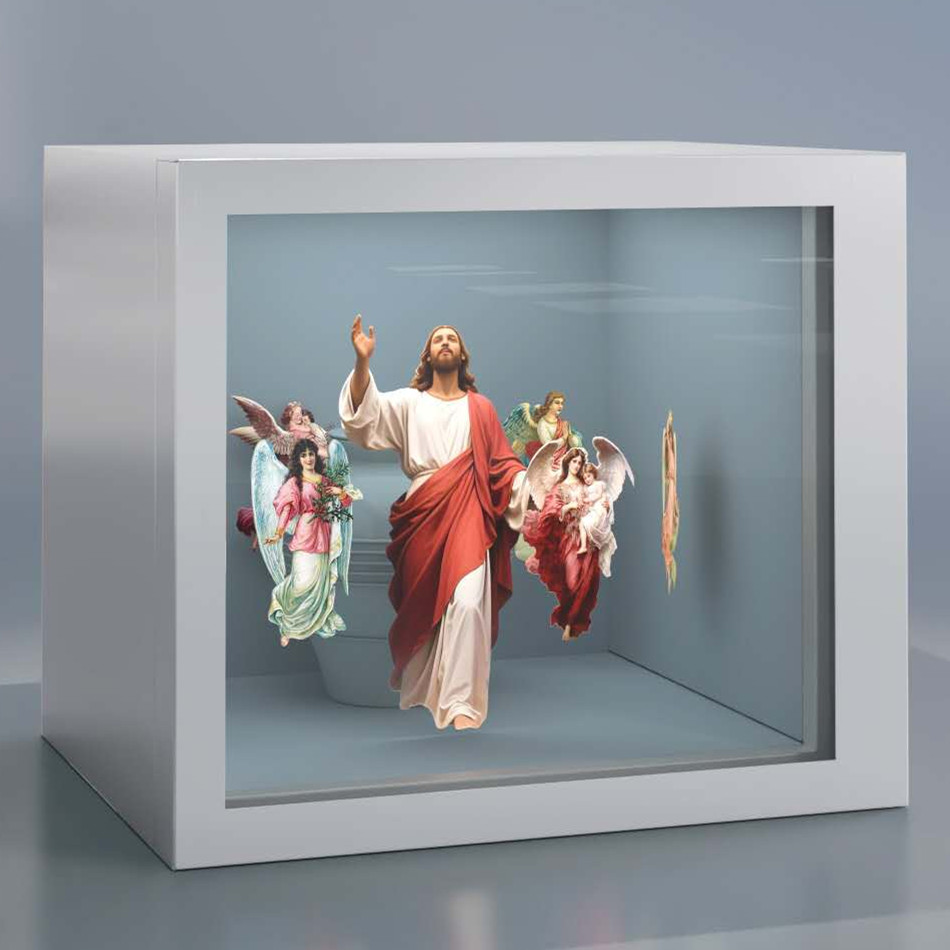
These systems utilize rear-projection films applied to glass substrates. Some setups use 3D holographic fan or prism technology. This creates floating, multidimensional visual tributes that command attention. The visual effect is striking, offering an ethereal quality that traditional flat panels cannot match.
Assess spatial requirements carefully before implementation. These setups require specific niche depth to house the projection hardware and maintain the correct throw distance. Strict ambient lighting controls are absolutely necessary. You must maintain image clarity and prevent visual washout from overhead lighting or nearby windows. We often specify Ambient Light Rejecting (ALR) films to combat this issue.
Advanced holographic projection columbarium niches serve as premium architectural focal points. They fit perfectly within luxury mausoleums or dedicated memorial atriums. They require significant upfront planning during the architectural phase to ensure the projection angles are unobstructed.
Screens remain in a dormant, low-power state most of the time. They display a static name and dates to conserve energy and reduce heat. They activate via motion sensors, physical touch, or RFID/NFC tokens. Family members hold these tokens near the glass to unlock personalized video content.
This approach significantly reduces power consumption and heat generation. It extends the lifespan of the backlight array. However, it increases mechanical complexity. Touch sensors require frequent screen cleaning to remove fingerprints. Proximity sensors must be calibrated precisely to avoid false triggers from passing visitors or even large insects.
| Display Technology | Primary Advantage | Main Limitation | Ideal Environment |
|---|---|---|---|
| Commercial LCD | High durability against static image burn-in. | Thicker profile requires deeper stone cutouts. | Standard climate-controlled mausoleums. |
| OLED Panels | Perfect black levels and ultra-thin form factor. | Susceptible to burn-in from static names/dates. | Premium niches with constantly rotating video content. |
| Holographic Projection | Creates a unique, floating 3D visual effect. | Requires strict ambient light control to prevent washout. | Dedicated, dimly lit memorial atriums. |
| Proximity-Triggered | Massively reduces heat output and power draw. | Sensors require precise calibration to avoid false triggers. | High-traffic corridors where constant video would be distracting. |
Embedding electronics into stone, glass, and metal presents hidden structural challenges. Standard indoor columbarium niches require careful planning to accommodate wiring, media players, and ventilation. You cannot treat this like hanging a picture frame.
Enclosed niches trap heat efficiently. Screens and media players generate this heat continuously. This thermal buildup leads to premature hardware failure, swollen capacitors, and screen discoloration. When you place a 50-watt display inside a sealed granite box, the internal temperature can exceed 140 degrees Fahrenheit within hours.
Passive cooling channels are necessary within the stone framework. We design vertical flues behind the niches to allow hot air to rise and escape. Active micro-ventilation helps dissipate heat from the electronics compartment. We use magnetic levitation fans that operate silently to push air through the enclosures.
Low-voltage Power over Ethernet (PoE) delivery systems are highly recommended. PoE reduces the risk of electrical fire and simplifies cabling. You run a single Cat6 cable to deliver both data and power. This eliminates the need for bulky AC power outlets inside every single niche. Integrate Uninterruptible Power Supplies (UPS) into the main distribution panel. This protects sensitive hardware from power surges. It maintains dignified displays during brief localized outages, preventing sudden black screens that distress visiting families.
Evaluate hardwired Ethernet versus enterprise Wi-Fi networks. Ethernet provides reliable, uninterrupted video streaming. It ensures stable remote troubleshooting and seamless firmware updates. Wi-Fi is prone to interference in buildings with heavy stone, marble, and metal construction. Wireless signals bounce unpredictably off polished granite, leading to dropped connections and buffering videos.
Compare local on-premise servers to cloud-based CMS platforms. Local servers have high upfront hardware costs. However, they carry no recurring cloud fees and are immune to internet outages. If the facility loses its external internet connection, the local server keeps the memorials running. Cloud-based CMS allows easier remote updates and family uploads from home.
You need a CMS that automatically transcodes modern file formats. Families will upload HEIC images from their iPhones and 4K MP4 video files. The CMS must convert them into optimized, 1080p display-ready media without manual intervention. It should also strip out malicious code to protect the network.
Physical design impacts the perceived value of the memorial. It directly affects accessibility and the dignity of the space. Technology should enhance the environment, not dominate it.
Hide bezels, wiring, and ventilation gaps completely. Integrate them seamlessly within marble, granite, or premium wood finishes. Do this early during the custom memorial niche design phase. We use CNC waterjet cutting to create precise recesses in the stone faceplates. The technology should feel native to the architecture, not bolted on as an afterthought.
Front-serviceable designs are critical for long-term operations. Technicians must be able to replace failing screens easily. They should never have to dismantle surrounding stone. They must never disturb the urn or the sacred contents of the niche. We utilize push-to-release magnetic brackets. A technician applies gentle pressure to the glass, and the screen pops forward, allowing access to the cables behind it.
Ensure interactive touchscreens are placed at accessible heights. Proximity sensors must accommodate wheelchair users and elderly visitors. The interface must be reachable without straining. The standard forward reach range is typically between 15 and 48 inches from the floor.
Select IPS (In-Plane Switching) panels or apply specific glass treatments. Ensure the display is clearly visible from various heights and sharp viewing angles. Visitors should not see distorted colors or inverted images when standing off-center. High-brightness panels are required if the niche faces a large window or glass atrium.
Overlapping audio from multiple video memorials creates a chaotic environment. It ruins the dignified atmosphere required in a mausoleum. You must control sound bleed. If ten niches are playing different eulogies simultaneously, the space becomes unusable.
Implement directional ultrasonic speakers that beam sound only to the person standing directly in front of the niche. These parametric speakers use high-frequency waves to create a tight cylinder of audio. Step one foot to the left, and the sound disappears. Broadcast Bluetooth audio directly to visitors' smartphones. Alternatively, provide dedicated wireless headset jacks built into the niche frame.
You need a comprehensive framework for vetting vendors. Scalability and compliance are your primary evaluation dimensions. Do not hire a vendor who has never worked in a memorial setting.
Hiring separate stone fabricators and AV integrators carries significant risks. Finger-pointing occurs when hardware fails to fit the stone cutouts. The stonemason blames the AV integrator for providing the wrong dimensions, and the AV integrator blames the stonemason for inaccurate cutting. Partnering with a unified columbarium niche manufacturer ensures seamless integration. They handle the complete columbarium project design from structural engineering to software deployment.
Evaluate the feasibility of upgrading existing infrastructure. You must add digital faceplates without compromising structural integrity. Ask vendors for case studies demonstrating successful retrofits in older facilities. They should explain exactly how they route new Cat6 cables through existing masonry without causing structural damage.
Demand clear hardware replacement cycles in your Service Level Agreements (SLAs). Commercial screens typically last 50,000 to 70,000 hours. Ensure remote IT support is explicitly included in the contract. You need a partner who can remote into the media player to restart a frozen video, saving you a physical service call.
The manufacturer must have secure, redundant data backup protocols. Clarify terms of service regarding data ownership immediately. Guarantee families retain full rights to their uploaded memorial videos. Data must be fully portable if you decide to change vendors in the future. You do not want your families' memories held hostage by a proprietary software platform.
Deploying digital infrastructure in memorial spaces carries unique operational risks. You must proactively address hardware lifecycles, content security, and network stability. Ignoring these factors leads to blank screens and angry families.
Mitigate hardware obsolescence by insisting on standardized VESA mounts. Use open-source or highly adaptable CMS platforms. Avoid proprietary hardware lock-in that forces you to buy expensive replacements from a single vendor. If a screen dies in five years, you should be able to buy a commercial replacement off the shelf and bolt it right onto the existing bracket.
Establish strict upload portals with multi-tier approval workflows. Prevent inappropriate content from appearing in a sacred space. Facility managers must review all media before it goes live on the niche screen. The CMS should flag copyrighted music to prevent legal issues for the facility.
Implement fail-safes for system downtime. Store default static images on local SD cards within the media player. Ensure the niche maintains a dignified appearance even during severe network outages. If the cloud server goes down, the screen should automatically revert to a high-resolution image of the deceased's name and dates.
A: Commercial-grade screens operate reliably for 50,000 to 70,000 hours. If you configure the displays to enter a low-power dormant state during off-hours, the hardware can easily last five to eight years before requiring physical replacement. Proper thermal management extends this lifespan significantly.
A: Families access a secure, cloud-based portal provided by the facility. They upload media directly from their personal devices. A robust CMS automatically transcodes common formats like JPEG, PNG, HEIC, MP4, and MOV into optimized files for the niche display.
A: Yes, retrofitting is possible, but it requires careful structural assessment. Technicians must route low-voltage wiring and ensure adequate ventilation. Custom digital faceplates are often fabricated to replace the original stone or glass fronts without disturbing the urns inside.
A: Holographic projections struggle in direct sunlight. They require strict ambient lighting controls. In brightly lit atriums, facilities must use high-lumen projectors, specialized ambient light-rejecting (ALR) films, or tinted architectural glass to prevent the image from washing out.
A: During power loss, Uninterruptible Power Supplies (UPS) keep screens running briefly. If internet connectivity drops, commercial media players rely on local SD card storage to display cached static images or pre-downloaded videos, preventing blank screens.
A: Facilities prevent audio pollution by using directional ultrasonic speakers that target sound only to the viewer. Alternatively, they implement Bluetooth broadcasting, allowing visitors to listen to the memorial audio privately through their own smartphones and earbuds.
