
Views: 0 Author: Site Editor Publish Time: 2026-10-28 Origin: Site
Selecting a final resting vessel requires balancing aesthetic preferences with strict structural and environmental requirements. Buyers face a fragmented market where superficial finishes often mask inferior base metals, leading to unexpected tarnishing, structural failure, or non-compliance with cemetery regulations. You need a vessel that guarantees permanence and mechanical security. This guide deconstructs the technical specifications, material properties, and manufacturing standards of metal urns. It provides a framework to evaluate longevity, security, and appropriate placement. You will learn how to identify quality construction and match the specific metal alloy to the final resting environment. We also detail how to navigate customization options safely without compromising the vessel's structural integrity or protective coatings.
A successful memorial vessel must deliver absolute permanence, mechanical security, and regulatory compliance. Families require assurance that the container will withstand decades of environmental exposure and physical handling. You must evaluate the physical properties of the base material. Contrast the tensile strength and impact resistance of metal against ceramic, glass, marble, and wood. Wood absorbs ambient moisture, leading to hygroscopic expansion, warping, and eventual joint failure. Glass and ceramic lack ductility; they shatter instantly upon blunt impact. Marble contains natural fault lines and fissures that can crack under thermal stress. Metal provides unparalleled shatter resistance. It absorbs kinetic energy through minor deformation rather than catastrophic failure. This structural resilience makes it the most reliable material for long-term preservation.
Security mechanisms set metal apart from porous and brittle alternatives. High-quality vessels feature precision-engineered threaded closures. Fabricators machine these threads directly into the metal collar using CNC lathes, ensuring exact tolerances. They integrate compressible rubber or silicone O-ring gaskets at the base of the threads. When tightened, the metal compresses the gasket, forming a hermetic seal. This level of mechanical engineering is unique to metal casting and machining. It ensures superior protection against accidental spills, moisture intrusion, and pest infiltration. Ceramic and wood vessels typically rely on loose friction-fit lids or messy, degrading adhesives. Adhesives dry out, crack, and fail over time. Threaded metal closures remain secure indefinitely. When evaluating cremation urns for ashes, mechanical security must dictate your selection process.
Environmental versatility drives material selection for permanent placement. Metal performs exceptionally well across varying humidity levels and extreme temperature fluctuations. Wood swells in high humidity and shrinks in dry winter air, breaking glue joints. Ceramic glazes craze and flake under rapid temperature shifts due to differing expansion coefficients between the clay body and the glass glaze. Metal maintains strict dimensional stability. It will not expand or contract enough to break the threaded lid seal or compromise the internal volume. This structural integrity remains constant whether placed in a climate-controlled home, a damp basement, or an outdoor columbarium niche. Metal guarantees the contents remain undisturbed.
| Material Category | Impact Resistance | Moisture Tolerance | Closure Security | Primary Failure Mode |
|---|---|---|---|---|
| Cast/Machined Metal | Excellent | High (Alloy Dependent) | Threaded / Hermetic | Surface Oxidation (if unsealed) |
| Hardwood | Moderate | Poor | Friction / Adhesive | Warping and Joint Separation |
| Ceramic / Glass | Poor | Excellent | Friction / Adhesive | Catastrophic Shattering |
| Natural Stone | Moderate | High | Adhesive | Fissure Cracking |
Understanding the specific metallurgy of memorial vessels prevents costly mistakes during placement. Not all metals perform equally in damp soil or humid air. You must match the alloy's chemical properties to the intended environment.
Brass and bronze feature a dense copper-alloy composition. Brass combines copper and zinc, while bronze utilizes copper and tin. Both offer heavy physical weight and a substantial, grounded presence. Foundries use traditional sand casting methods to manufacture these vessels. Workers pack silica sand around a master pattern, remove the pattern, and pour molten alloy at 1,700°F into the cavity. This process yields thick walls, seamless construction, and the ability to cast deep, ornate reliefs directly into the vessel body. These metals provide high durability and a premium tactile feel.
These traditional alloys require strict maintenance. They are highly susceptible to oxidation. A green or brown patina develops rapidly if the protective clear-coat finishes fail. Scratches from rough handling expose the raw copper alloy to atmospheric oxygen and moisture, triggering the chemical reaction. Manufacturers apply thick, baked-on polyurethane lacquers to prevent this. You must handle these vessels with soft gloves and avoid abrasive cleaners to maintain the factory finish.
Stainless steel relies on a microscopic chromium oxide layer to prevent degradation. When scratched, this passive film regenerates instantly in the presence of oxygen. Grade 304 stainless steel provides extraordinary tensile strength and absolute rust resistance in standard environments. Grade 316 adds molybdenum for enhanced resistance to chlorides, making it suitable for coastal regions. Stainless steel delivers a sleek, modern aesthetic and exceptional longevity. It is the ideal choice for highly humid environments, performing flawlessly in damp basements or outdoor niches.
The primary trade-off involves manufacturing limitations. Stainless steel is incredibly hard, rapidly dulling machining tools. It offers fewer intricate casting options compared to softer copper alloys. You will rarely find deep relief sculptures or ornate floral patterns on stainless steel vessels. The designs lean heavily toward minimalist cylinders, polished cubes, and brushed geometric forms. It prioritizes ultimate environmental survival over ornate decoration.
Aluminum features low density and natural corrosion resistance. It forms its own protective oxide layer instantly upon air exposure, preventing deep structural rust. It is highly adaptable to vibrant powder coating and anodizing processes. aluminum cremation urns are significantly easier to transport due to their reduced mass. Foundries often use metal spinning techniques for aluminum, turning flat sheets over a lathe mandrel to create perfect, seamless cylinders and teardrops rapidly. This makes them highly cost-effective to produce and ship.
The main drawback is the lack of physical mass. Aluminum feels significantly lighter in the hands than brass or bronze, which some families perceive as less substantial. While structurally sound and capable of holding a threaded seal, thin-walled spun aluminum can dent under heavy, direct impact. It serves as an excellent choice for temporary transport, air travel, or budget-conscious permanent display. It balances practical manufacturing with modern, durable finishing techniques.
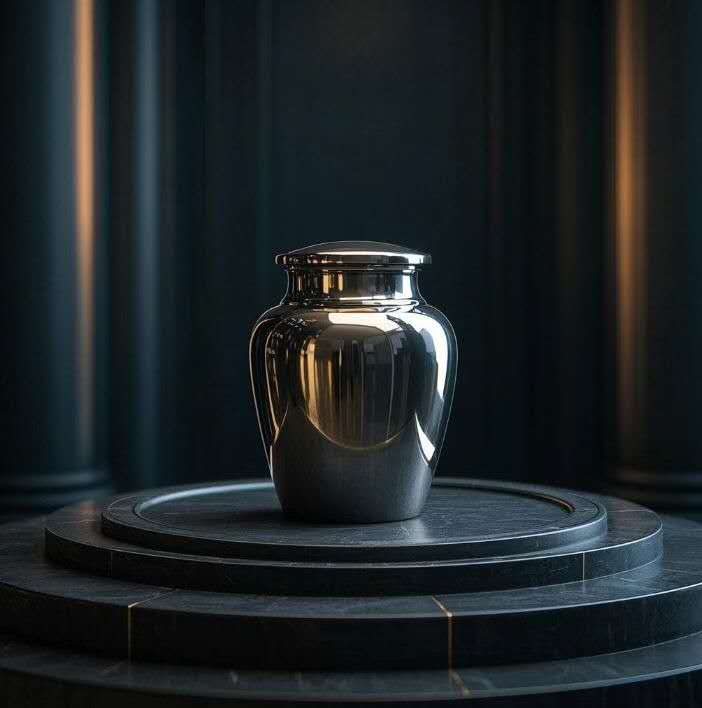
The malleability and melting points of different metals dictate the final structural style and available surface treatments. Understanding these manufacturing constraints helps you select a vessel that meets both visual and structural requirements.
Metal forming allows for incredibly diverse silhouettes. The specific casting or forming process dictates the final shape and wall thickness. Sand casting allows for heavy, ornate bases, sculpted lids, and intricate surface textures. Metal spinning creates perfect, seamless cylinders, spheres, and traditional Grecian vase shapes with thinner, uniform walls. Die casting forces molten metal into hardened steel molds under extreme pressure. This yields precise, repeatable geometric forms with exact dimensional tolerances. Each method produces a distinct structural style suited to different alloys.
Surface treatments determine the ultimate finish longevity and resistance to environmental degradation. Baked enamel involves applying liquid paint and curing it in high-temperature ovens, creating a hard shell that resists chipping. Electroplating bonds a microscopic layer of precious metal, like silver, nickel, or gold, to the base alloy using an electrical current. Powder coating applies dry thermoplastic powder electrostatically, which is then heat-cured at 400°F to form a continuous, plastic-like armor. These methods provide excellent defense against UV degradation and physical abrasion.
Clear-coat applications are absolutely essential for copper alloys. They prevent brass and bronze from tarnishing. A high-quality, UV-resistant polyurethane clear coat seals the metal away from atmospheric moisture. If this coat fails due to chemical cleaners or deep scratches, the metal oxidizes rapidly. Evaluating the thickness, evenness, and curing method of these surface treatments is critical for long-term preservation.
Personalization requires a strict understanding of metal hardness and coating integrity. Rotary engraving uses a spinning diamond-tipped bit to physically carve into the metal. It works exceptionally well on softer metals like aluminum and brass, providing deep, tactile lettering. Laser etching uses focused light to burn away the top finish or anneal the metal surface. It is better suited for harder alloys like stainless steel. When seeking custom metal cremation urns, you must consider the structural risks. Direct rotary engraving cuts through the protective clear coat on brass, exposing the raw metal to the air and guaranteeing localized tarnishing inside the engraved lines.
Alternative customization methods mitigate these coating risks entirely. You can use affixed brass plaques with high-bond adhesive backing. Engraved chain medallions hung around the vessel neck are also safe, traditional choices. These methods leave the primary clear coat intact. Manufacturers can also integrate appliqués and custom structural modifications safely during the initial casting process, before the final clear coat is applied.
The standard adult capacity is strictly defined as 200 cubic inches. This translates directly into the required internal metal volume. The general industry rule equates one pound of healthy living body weight to one cubic inch of internal space. Wall thickness heavily impacts internal capacity versus the external footprint. A sand-cast bronze vessel with quarter-inch thick walls requires a much larger external size to yield 200 cubic inches internally. A spun aluminum vessel has thin walls, keeping the external footprint compact while maintaining the same internal volume.
Companion and keepsake options provide flexibility for divided placement. Companion urns hold 400 cubic inches, designed for two individuals. Small-scale keepsake urns hold between 1 and 10 cubic inches. They match the primary vessel's design, alloy, and finish. They are often sold in coordinated metal sets for families dividing ashes among multiple households. Always verify the internal cubic inch capacity mathematically before making a final selection.
The final resting location dictates the required metal alloy. You must evaluate the environmental stressors of the specific site to prevent structural failure or regulatory rejection.
Columbarium niches have strict, non-negotiable dimensional constraints and weight limits per shelf. Standard niches often measure exactly 12x12x12 inches. A vessel that is half an inch too tall simply will not fit. You must account for the widest point of the vessel, including any decorative handles, flared bases, or domed lids. Controlled indoor environments preserve metal finish longevity perfectly. Outdoor columbariums expose the metal face to severe temperature swings, condensation, and UV radiation, requiring powder-coated aluminum or stainless steel to prevent finish degradation.
Earth burials expose metals directly to soil acidity, moisture, and mineral salts. This environment accelerates metal oxidation rapidly. Galvanic corrosion occurs when different metals touch in damp soil, acting as an electrolyte. Because of this rapid degradation, most cemeteries require a rigid outer burial vault made of concrete or high-density polymer. This rule applies even for highly durable stainless steel urns. The vault prevents ground collapse when heavy cemetery backhoes drive over the grave. It also creates a dry, protected micro-environment, isolating the metal vessel from the corrosive soil.
metal cremation urns are strictly designed for permanent placement or secure transport. They will not dissolve in water under any circumstances. Dropping a metal vessel into the ocean or a lake violates maritime environmental regulations and local dumping laws. Contrast them with rock salt, compressed sand, or paper urns, which are engineered to dissolve rapidly during sea burials. Metal vessels should only be used to transport ashes to the scattering site. You must then open the threaded lid and release the contents directly into the wind or water.
Air travel introduces significant TSA compliance risks. Heavy metals like thick cast brass and bronze are completely X-ray opaque. TSA agents cannot see inside them using standard security scanners. If the scanner cannot penetrate the metal to verify the contents, the vessel will not be allowed on the plane. Federal regulations strictly prohibit agents from opening the vessel to check the contents manually. Thin-walled aluminum is much less dense and is more likely to pass X-ray screening, but it is never guaranteed.
Mitigation strategies are necessary for transporting metal urns through airport security. The safest method is using a temporary plastic or wood vessel for the flight, as these are completely X-ray transparent. Pack the empty metal vessel securely in your checked luggage. You can easily transfer the ashes into the permanent metal vessel once you reach your final destination. Always carry the official certificate of cremation and the funeral home's documentation with your travel papers.
| Placement Type | Recommended Metal | Environmental Stressor | Regulatory Requirement |
|---|---|---|---|
| Indoor Columbarium | Brass, Bronze, Aluminum | Minimal (Dust) | Strict Dimensional Limits |
| Earth Burial | Stainless Steel | Soil Acidity, Moisture | Outer Burial Vault Mandatory |
| Air Travel (Carry-on) | Thin Aluminum (Risky) | X-Ray Opacity | Must Pass TSA Scanner Unopened |
| Home Display | Any Metal | UV Light, Handling | None |
Procuring a structurally sound vessel requires vetting the manufacturer's fabrication standards. Superficial finishes easily hide poor welds, porous castings, and misaligned threads.
Evaluating manufacturing standards is crucial for securing a permanent vessel. Look for facilities with ISO 9001 quality management certifications. Demand absolute material sourcing transparency. A reliable metal urn manufacturer will clearly explain their metallurgical processes, specifying exact alloy grades like 304 stainless or 6061 aluminum. They will not hide behind vague marketing terms like "premium metal" or "heavy-duty alloy." You must understand the technical difference between spun metal, cast metal, and welded sheet metal construction to assess longevity.
Cast metal offers seamless structural integrity with thick walls. Spun metal is also seamless but features thinner walls that require careful handling. Welded sheet metal construction relies entirely on the quality of the seams. Poorly executed welds will eventually crack under thermal stress or physical impact. High-quality manufacturers use Tungsten Inert Gas (TIG) welding with argon gas shielding to prevent seam oxidation. They also conduct rigorous hydrostatic pressure testing to ensure the vessel is completely airtight before applying the final finish.
Distributors and funeral directors must assess batch consistency rigorously. Thread alignment, gasket quality, and finish durability are critical inspection points. When purchasing wholesale cremation urns, you must watch for specific manufacturing red flags. Exceptionally thin walls indicate aggressive cost-cutting; you can often feel the metal flex under heavy thumb pressure. This compromises the threaded collar's stability.
Painted threads are a major defect. Paint clogs the fine machining, causing cross-threading and guaranteeing a poor, non-airtight seal. Threads should always be bare, machined metal. Uneven clear coats lead to rapid, patchy tarnishing on brass and bronze. Inspect the interior of the vessel using a flashlight. Quality manufacturers clean the interior of casting sand, machining oils, and welding slag. Poorly manufactured vessels often contain sharp metal burrs and residual industrial debris inside, which can tear the internal plastic ash bag.
Follow these specific steps to finalize your metal vessel selection and ensure long-term structural integrity:
A: Ferrous metals like standard steel rust when exposed to moisture. High-quality 304 or 316 stainless steel resists rust entirely. Copper alloys like brass and bronze do not rust, but they develop a green or brown patina (tarnish) as they oxidize. Manufacturers apply thick polyurethane clear coats to prevent this. As long as the clear coat remains unscratched, the metal will not tarnish.
A: TSA requires all containers to pass through X-ray machines. Dense metals like thick cast brass, bronze, and lead-lined vessels are X-ray opaque and will fail screening. TSA agents will not open them manually. Thin-walled aluminum may pass the scan. It is highly recommended to transport ashes in a temporary plastic container and pack the empty metal vessel in checked luggage.
A: Most high-quality metal vessels feature precision-threaded lids that provide a secure mechanical closure. For a permanent, airtight seal, apply a small bead of metal-specific epoxy or clear silicone sealant directly to the male threads before screwing the lid shut. Wipe away any excess sealant immediately. Once cured, the lid cannot be removed without damaging the vessel.
A: The industry standard for an adult is 200 cubic inches, roughly equating to a 200-pound person. Metal wall thickness dictates the external footprint required to achieve this internal volume. Companion sizes hold 400 cubic inches for two individuals. Keepsake sizes hold between 1 and 10 cubic inches and are used for dividing ashes among multiple family members.
A: Direct burial is not recommended. Soil alkalinity, acidity, and moisture cause galvanic corrosion, degrading the aluminum rapidly. The weight of the settling earth and heavy cemetery maintenance equipment can also crush un-vaulted spun metal vessels. Most cemeteries mandate the use of a rigid concrete or polymer outer burial vault to protect the vessel and prevent grave collapse.
A: No. Metal will not dissolve in water. Dropping a permanent metal vessel into a body of water violates environmental and maritime regulations. Metal vessels are strictly for permanent display, columbarium placement, or earth burial within a vault. You can use a metal vessel to transport ashes to a boat, but you must scatter the ashes directly into the water.
A: Use only a dry, soft microfiber cloth to remove dust. Never use abrasive chemical cleaners, brass polish, or stiff brushes. These will scratch or strip the protective clear coat, exposing the raw metal to oxygen and causing rapid tarnishing. Keep the vessel out of direct, intense sunlight to prevent the clear coat from yellowing or cracking over time.
