

Views: 0 Author: Site Editor Publish Time: 2026-09-22 Origin: Site


The steady increase in global cremation rates has fundamentally shifted how funeral homes, distributors, and families evaluate end-of-life containers. The industry focus has moved away from long-term soil preservation toward thermal efficiency, immediate presentation, and strict environmental compliance. Selecting the appropriate cremation container requires balancing conflicting operational priorities. Facilities must meet stringent crematory emission standards without compromising the structural robustness required for safe transport and handling. Furthermore, families expect aesthetic dignity for viewings, often while navigating varying budget constraints. This guide provides a technical and practical evaluation of the two dominant materials—MDF (Medium-Density Fiberboard) and solid wood. By analyzing their structural properties, combustion profiles, and overall utility, we facilitate evidence-based purchasing decisions that align with both daily operational workflows and high family expectations.
Combustion & Compliance: Solid wood burns cleaner with fewer synthetic emissions, while modern MDF requires specific manufacturing standards to ensure the binders and adhesives comply with crematory emission regulations.
Cost vs. Aesthetics: An MDF cremation coffin offers a highly predictable, cost-effective substrate for high-quality wood veneers, mimicking expensive hardwoods at a fraction of the cost.
Structural Predictability & Robustness: MDF provides uniform density without natural defects (knots, warping), whereas a solid wood cremation coffin offers superior overall tensile strength, longevity during transport, and traditional craftsmanship appeal.
Sourcing: Partnering with a verified cremation coffin manufacturer is critical to ensure that both MDF and solid wood options utilize cremation-safe, combustible hardware and non-toxic finishes.
Establishing baseline definitions for what qualifies as a safe, functional, and dignified cremation container is the first step in material selection. A successful container must support the weight of the deceased safely, present beautifully during memorial services, and incinerate efficiently without damaging crematory equipment or violating environmental regulations. Understanding the exact composition of these materials prevents costly purchasing errors.
Medium-Density Fiberboard is an engineered wood product. Manufacturers create it by breaking down hardwood or softwood residuals into fine wood fibers using a defibrator. These fibers are combined with wax and resin binders, then formed into panels by applying high temperature (often exceeding 300°F) and intense hydraulic pressure. The resulting material is exceptionally dense, typically ranging from 600 to 800 kg/m³. When evaluating an MDF coffin for cremation, you must distinguish it from lower-tier engineered woods like basic chipboard or particleboard. MDF offers superior density, structural uniformity, and the ability to hold complex routed shapes without the edges crumbling.
Because raw MDF lacks the visual appeal of natural wood grain, manufacturers apply external veneers to achieve the final aesthetic finish. These veneers range from printed paper and foil wraps to thin slices of real wood. High-quality veneering techniques utilize industrial heat presses to bond the veneer to the MDF core. This ensures the exterior looks identical to traditional timber, providing a dignified appearance for viewings and services while utilizing a highly engineered core.
Solid wood construction means the container is built entirely from natural timber milled directly from logs. It showcases authentic grain patterns without relying on synthetic core materials or engineered substrates. A solid wood cremation coffin utilizes traditional joinery techniques, such as dovetail or mortise and tenon joints. These units rely on the inherent structural rigidity of natural timber to provide exceptional strength.
The materials used in solid wood construction vary widely based on regional availability and desired aesthetics. Common species range from accessible softwoods like Eastern White Pine, which offer a simple and natural look, to premium hardwoods such as Red Oak, Black Walnut, and Cherry. Hardwoods provide a rich, heavy, and highly polished aesthetic that honors traditional craftsmanship. To ensure stability, the raw timber must be kiln-dried to a specific moisture content, typically between 8% and 10%, before assembly. Because they lack synthetic cores, solid wood containers rely entirely on the natural properties of the harvested timber for their strength and visual appeal.
The primary functional requirement of any cremation container is its ability to incinerate safely and efficiently. The physical and chemical properties of the material directly impact the cremation timeline and the environmental output of the crematory retort. Operators must understand how different materials behave inside a primary chamber operating at 1400°F to 1800°F.
The ignition and sustained burn rates differ significantly between dense MDF and natural wood grain. MDF possesses a uniform density across every panel. This consistency means it burns at a highly predictable rate. However, the high density and the presence of resin binders require higher initial temperatures to ignite compared to dry natural wood. Once ignited, MDF sustains a steady, controlled burn that operators can easily manage with standard air jet settings.
Conversely, solid wood exhibits variable density and moisture content depending on the species and the curing process. Softwoods like pine ignite quickly and burn rapidly, generating a sudden spike in thermal output. Hardwoods burn slower and hotter. Crematory operators must adjust their equipment settings based on the specific wood species to manage the thermal efficiency and prevent overheating the cremation chamber. Failure to adjust air flow for a fast-burning pine container can trigger temperature alarms and automatic burner shutdowns.
Material Type | Average Density | Ignition Speed | Thermal Output Profile |
|---|---|---|---|
MDF (Engineered) | 600 - 800 kg/m³ | Moderate to Slow | Steady, predictable, controlled burn. |
Pine (Softwood) | 350 - 500 kg/m³ | Fast | Rapid heat spike, fast consumption. |
Oak (Hardwood) | 600 - 750 kg/m³ | Slow | High sustained heat, long burn duration. |
The chemical makeup of MDF binders requires careful scrutiny. Traditional MDF utilizes urea-formaldehyde resins. During incineration, these resins can release unwanted chemical emissions and dark smoke if the retort lacks sufficient oxygen. You must source low-emission, CARB Phase 2 compliant MDF for cremation containers. Modern manufacturing standards ensure these binders minimize toxic off-gassing, keeping crematory emissions within legal environmental limits set by local air quality boards.
Solid wood offers a natural combustion profile. It contains zero synthetic core resins, resulting in clean incineration. The environmental impact is limited to the natural carbon release of burning timber. For eco-conscious buyers and facilities operating under strict local air quality regulations, the clean-burning nature of natural wood presents a distinct operational advantage. Operators rarely have to adjust secondary chamber burners to handle excess smoke when processing solid wood.
Regardless of the primary material, a dedicated cremation coffin and casket must adhere to strict hardware restrictions. Crematory retorts cannot process heavy metals without risking severe damage to the refractory brick lining. Therefore, all structural hardware must be combustible. Manufacturers utilize wooden dowels, specialized high-heat plastics, or heavy-duty natural rope for structural joints and load-bearing handles.
Many families prefer the look of traditional metal handles for the memorial service. To accommodate this, manufacturers design hybrid models featuring removable metal handles. Funeral directors detach these metal fixtures immediately prior to the container entering the cremation chamber. This ensures the unit remains fully compliant with crematory safety standards while still providing a premium aesthetic during the viewing.
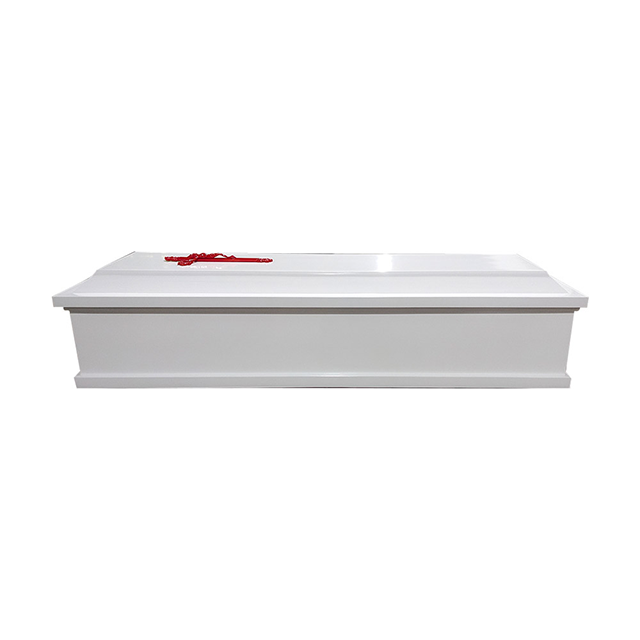
A cremation container must withstand the physical demands of transport, storage, and handling. From the manufacturer's warehouse to the funeral home, and finally to the crematory floor, the structural integrity of the unit ensures the safety of the staff and the dignity of the deceased.
Both materials offer sufficient weight capacity for standard requirements, typically rated for 250 to 300 lbs. However, their structural behaviors differ under stress. Solid wood provides higher resistance to localized impact. Its long, continuous wood fibers offer superior overall robustness and tensile strength. If a solid wood container bumps against a doorframe during transport, the wood may dent, but the structural integrity of the joint remains intact.
MDF relies on its dense, compressed core for strength. While the bottom-board strength is exceptional for bearing static weight, the material can be brittle at the edges. MDF is susceptible to corner crushing or chipping if mishandled by pallbearers or crematory staff. Dropping an MDF container on a hard concrete surface can cause the engineered fibers to fracture, potentially compromising the external veneer and weakening the structural joint.
Always lift MDF containers from the reinforced base rather than pulling on decorative side panels.
Utilize roller tables when transferring containers from transport vehicles to the crematory loading lift.
Inspect the bottom corners of all engineered containers upon delivery to identify any transit damage before use.
Storage environments play a major role in maintaining container integrity. A wooden cremation coffin requires careful climate control. Natural timber remains hygroscopic, meaning it absorbs and releases moisture from the air. In high-humidity environments, solid wood is susceptible to warping, expansion, or cracking along the grain. Facilities must store these units in stable, climate-controlled areas to prevent structural distortion.
MDF behaves differently under moisture stress. It is generally highly stable in climate-controlled environments and does not warp or crack like natural wood. However, MDF carries a severe risk of permanent swelling if exposed directly to standing water. If the raw, unveneered edges of an MDF panel absorb liquid, the fibers expand irreversibly, destroying the panel's integrity. Proper palletizing and dry storage are mandatory to prevent ground moisture absorption.
The visual presentation of the container holds immense emotional weight for families. The chosen material dictates the aesthetic possibilities, ranging from flawless modern finishes to the unique, tactile beauty of natural grain.
Advanced manufacturing techniques have elevated the visual capabilities of engineered wood. The application of high-quality veneers allows an MDF cremation coffin to appear virtually indistinguishable from solid wood during a viewing or memorial service. Wood-slice veneers replicate the exact grain patterns of oak, walnut, or cherry. This provides a dignified and traditional appearance without the associated raw material costs of solid hardwood.
Despite the advancements in veneering, solid wood retains an intrinsic emotional value. Families often seek the timeless beauty, unique knots, and tactile authenticity of natural timber to honor a loved one. The subtle imperfections and deep, natural luster of polished hardwood convey a sense of permanence and traditional respect that engineered materials cannot fully replicate. The weight and feel of solid wood communicate a premium standard.
Customization requirements often dictate the choice of material. MDF is highly adaptable to modern manufacturing processes. It allows for precise, uniform CNC routing to create intricate panel designs without the risk of tear-out common in natural wood. The smooth, defect-free surface is ideal for modern wrapping techniques and consistent color matching. This makes MDF perfect for producing uniform, branded, or highly specific contemporary designs.
Solid wood offers different customization advantages. Designing a custom cremation coffin from natural timber allows for traditional hand-carving, custom staining, and bespoke craftsmanship. Artisans can work with the natural grain to create unique, sculptural elements. However, the natural variations in the wood mean that no two solid wood containers will ever look exactly alike. This lack of strict uniformity is a feature for some, but a limitation for facilities requiring identical inventory.
Balancing the budget against the desired aesthetic and structural requirements is a primary concern for purchasing managers and families alike. The material selection fundamentally drives the final cost of the unit.
The cremation container market operates on distinct material tiers. At the lowest cost tier, you find MDF and veneered chipboard. The raw materials are abundant, and the highly automated manufacturing process keeps production costs low. The mid-tier consists of accessible softwoods like pine. Pine grows quickly, is easy to machine, and offers a natural wood option at a moderate price point.
The premium tier is dominated by hardwoods such as oak, walnut, and mahogany. The specific type of wood directly dictates the final price. Hardwoods take decades to mature, require extensive drying times, and demand specialized tooling to cut and shape. The raw material scarcity and the labor-intensive construction process make premium solid wood the most expensive option available on the market.
Evaluating these materials requires analyzing a core conceptual trade-off. Buyers must weigh the perceived value of paying a premium for a solid wood container against its practical utility. Since the container will ultimately be incinerated, investing heavily in premium hardwoods may not align with every budget.
Maximizing budget efficiency often leads buyers to engineered options. MDF provides the practical utility of a strong, combustible container while maintaining visual dignity during the service through high-quality veneers. This allows families to allocate their funds toward other aspects of the memorial service while still providing a respectful and beautiful presentation.
Feature / Characteristic | MDF Cremation Coffin | Solid Wood Cremation Coffin |
|---|---|---|
Combustion Profile | Predictable, steady burn; requires low-emission binders. | Variable burn rate based on species; clean, zero-synthetic emissions. |
Structural Robustness | High static weight capacity; susceptible to edge/corner crushing. | High overall tensile strength; excellent resistance to localized impact. |
Aesthetic Presentation | Uniform appearance via veneers; mimics hardwood effectively. | Authentic grain, unique knots, and natural tactile beauty. |
Moisture Sensitivity | Stable in humidity; high risk of irreversible swelling if wet. | Susceptible to warping or cracking in fluctuating humidity. |
Supply Chain Scalability | Highly scalable; predictable manufacturing timelines. | Subject to timber market fluctuations and long drying times. |
The quality of the final product relies entirely on the manufacturing standards. Sourcing containers from unverified suppliers introduces significant operational and compliance risks that can disrupt daily workflows.
Vetting a cremation coffin manufacturer requires strict criteria. You must verify their adherence to environmental emission standards. Request documentation proving their MDF binders are CARB Phase 2 compliant. Next, evaluate the quality of their veneer adhesion. Poorly applied veneers will bubble, peel, or delaminate during transit, ruining the presentation. Finally, review their documented structural testing protocols to ensure the bottom boards and handles meet standard weight capacity requirements.
Request physical material samples to test veneer adhesion strength.
Verify the manufacturer uses combustible hardware for all structural joints.
Review third-party emission testing certificates for all engineered wood products.
Confirm the manufacturer's packaging protocols protect vulnerable MDF corners during freight transit.
The availability of raw materials impacts supply chain reliability. MDF offers highly scalable, consistent production timelines. The engineered nature of the material ensures predictable pricing and steady availability, making it ideal for high-volume inventory management. Solid wood is subject to timber market fluctuations, supply chain delays, and longer curing and drying times. Relying heavily on specific premium hardwoods can lead to inventory shortages if global timber supplies tighten or logging quotas change.
Request material specification sheets and emission compliance certificates from your current suppliers to verify environmental safety.
Order physical samples of veneered MDF and solid wood to evaluate the tactile quality, finish, and joint construction firsthand.
Audit your storage facilities to ensure climate control and dry conditions are adequate for the specific materials you intend to stock.
Train transport and handling staff on the specific vulnerabilities of MDF corners versus solid wood surfaces to minimize accidental damage.
A: Generally, no. A standard burial casket often contains non-combustible metal parts, heavy steel hinges, and metal spring beds that can severely damage a crematory retort. A specific cremation container is designed entirely with combustible materials, ensuring safe and efficient incineration without leaving hazardous metal debris in the chamber.
A: Safety depends entirely on the resins used during manufacturing. Modern, regulated MDF coffins are manufactured with low-emission binders designed to minimize toxic off-gassing during the cremation process. Always verify CARB Phase 2 emission certificates with the manufacturer before purchasing.
A: Yes, the decision is driven by the desire for a traditional aesthetic during the viewing. Families value the timeless beauty of specific grains like mahogany or cherry, hold religious or cultural preferences for natural materials, and appreciate the avoidance of synthetic chemicals during incineration.
A: Standard industry weight capacities typically range from 250 to 300 lbs for standard models. Reinforced bariatric options are available for higher weights. The structural integrity relies heavily on the base board thickness and the quality of the joint reinforcement.
A: While MDF and veneered chipboard are generally the most affordable engineered options, unfinished pine is typically the most cost-effective natural solid wood choice. Pine grows quickly and requires less intensive milling than premium hardwoods, keeping production costs lower.
A: Handles on a dedicated cremation container are either made of combustible materials like wood, heavy-duty rope, or specific polymers. If metal handles are used for aesthetic purposes during a viewing, they are engineered as removable fixtures that are detached prior to the container entering the cremation chamber.


