

Views: 0 Author: Site Editor Publish Time: 2026-09-08 Origin: Site


Increasing municipal regulations, environmental scrutiny, and the demand for community-friendly operations force crematory operators to move beyond basic secondary combustion. Facilities must implement advanced exhaust treatment technologies to remain compliant. Operators face a strict balancing act. They must maintain high-volume operational efficiency while meeting local emission limits for particulate matter (PM), heavy metals, and volatile organic compounds (VOCs). They also need to manage fuel efficiency and minimize maintenance downtime. Understanding the precise mechanical and chemical processes of a cremation machine emission filter system is necessary for facility managers. You need this knowledge when evaluating compliance upgrades, assessing operational logistics, and shortlisting equipment vendors. We will break down the exact stages of emission control, from thermal oxidation to physical particulate filtration, providing a clear engineering perspective on how these systems function in the field.
Modern cremation emission control relies on a multi-stage process: thermal oxidation, rapid gas cooling, reagent injection, and physical particulate filtration.
Meeting stringent cremation equipment environmental standards requires matching the filtration technology (e.g., dry sorbent injection vs. wet scrubbers) to specific local regulatory thresholds and facility caseloads.
Retrofitting older retorts carries distinct engineering risks; evaluating a custom cremation filter system is often necessary to accommodate existing spatial constraints, draft dynamics, and exhaust profiles.
Selecting a cremation filter system manufacturer should be based on their integration capabilities, continuous emission monitoring system (CEMS) compatibility, and long-term maintenance support rather than initial capital cost alone.
Defining a successful cremation machine emission control strategy goes far beyond simply installing a secondary burner. Modern facilities must achieve zero visible emissions, eliminate odors entirely, and maintain strict compliance with local clean air acts. They must accomplish this while demonstrating environmental stewardship to the surrounding community and ensuring the filtration equipment does not create bottlenecks that impact daily throughput. When an operator hits the start button on a cycle, the downstream equipment must automatically handle massive fluctuations in temperature, moisture, and chemical composition without manual intervention.
The combustion process generates a complex mixture of exhaust gases and solid particles. Effective filtration systems must be engineered to handle several distinct categories of pollutants simultaneously. The fuel source in a retort is highly variable. Caskets contain varnishes, zinc handles, and synthetic fabrics. Body bags introduce heavy plastics. The filtration system must react to these variables in real time.
Particulate Matter (PM): This includes ash, unburned carbon, and microscopic dust. Particulate matter is generated during the primary combustion phase and during the physical gathering of cremated remains. High-velocity draft operations pull these particles into the exhaust stream. Sub-micron particles require highly specialized fabric filters for capture, as standard cyclone separators cannot trap them.
Heavy Metals: Mercury (Hg) is the primary concern, originating almost entirely from vaporized dental amalgams. Because mercury vaporizes at relatively low temperatures, it cannot be destroyed by heat. It remains a gas throughout the combustion process and must be captured through chemical adsorption downstream.
Acid Gases & Dioxins/Furans: The combustion of caskets, synthetic linings, and plastics produces hydrogen chloride (HCl), sulfur dioxide (SO2), and complex organic compounds. Dioxins and furans are highly toxic byproducts that form under specific temperature conditions when chlorine and organic matter react.
Nitrogen Oxides (NOx) and Sulfur Oxides (SOx): These are inherent byproducts of high-temperature combustion. They contribute to smog and acid rain, requiring specialized neutralization techniques before the exhaust reaches the atmosphere.
Regional regulatory bodies dictate the required efficiency of exhaust treatment. This regulatory pressure shifts the industry standard away from simple afterburners toward comprehensive filtration suites. Understanding cremation equipment environmental standards dictates your facility planning. Jurisdictions increasingly demand continuous monitoring of opacity, carbon monoxide, and oxygen levels. Facilities failing to meet these dynamic standards face operational shutdowns, heavy fines, and severe reputational damage. Compliance requires equipment capable of adapting to varying caseloads and diverse casket materials without exceeding permitted emission thresholds. Opacity limits in many urban areas now sit below 5%, meaning the stack exhaust must be entirely invisible to the naked eye.
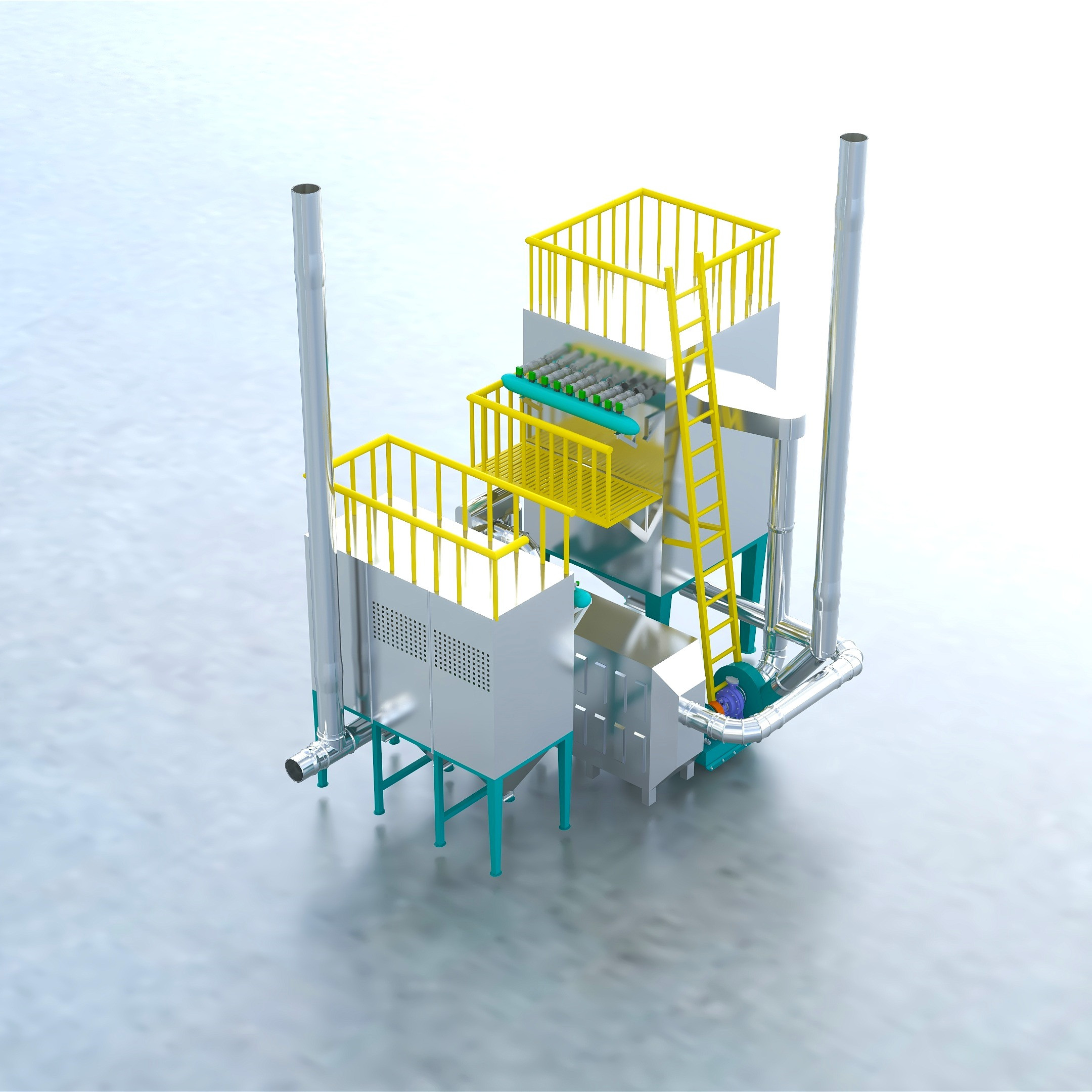
A modern cremation filter system operates as a sequential, multi-stage processing plant. Each stage performs a specific thermal, thermodynamic, or chemical function to strip pollutants from the exhaust stream before it exits the stack. Skipping or under-sizing any of these stages results in immediate compliance failures.
The first line of defense is the secondary combustion chamber. Exhaust gases from the primary chamber carry unburned hydrocarbons, carbon monoxide, and volatile organic compounds. The secondary chamber retains these gases at extreme temperatures, typically between 1562°F and 1832°F (850°C - 1000°C). The gases must remain in this chamber for a specific residence time—usually one to two seconds—to ensure complete thermal oxidation. Heavy refractory baffle walls force the gas to tumble and mix with oxygen, breaking down complex organic molecules into simple water vapor and carbon dioxide.
High heat also manages biological and moisture loads. The human body contains between 65% and 85% water by weight. The secondary chamber must manage this massive influx of steam without dropping below the critical temperature threshold required for complete combustion. Modulating burners automatically ramp up to counter the cooling effect of the steam. This extreme thermal environment simultaneously destroys all bacteria, viruses, and pathogens, guaranteeing that the resulting emissions are completely sterile.
Gases exiting the secondary chamber are far too hot to pass through physical fabric filters. They must be rapidly cooled. This cooling phase protects downstream equipment and serves as a chemical necessity. If exhaust gases cool slowly through the temperature window of 750°F down to 400°F (400°C to 200°C), a phenomenon called de novo synthesis occurs. This reaction causes destroyed dioxins and furans to reform in the exhaust stream. Rapid quenching pushes the gas temperature past this danger zone almost instantly.
Facilities employ one of two cooling techniques. Air-to-air heat exchangers use ambient air driven by large fans to cool the exhaust through a network of conductive stainless steel tubes. This method keeps the gas dry but requires significant physical space and regular cleaning to prevent tube fouling. Evaporative cooling towers inject a precise mist of water directly into the gas stream using compressed air atomizing nozzles. The water evaporates instantly, absorbing massive amounts of heat energy. While highly efficient and compact, evaporative cooling requires careful moisture control. If the system injects too much water, condensation forms in the ductwork, leading to severe acid corrosion.
Once the gas is cooled to a safe operating temperature (usually around 300°F to 350°F), it enters the chemical treatment phase. Dry sorbent injection (DSI) systems introduce highly reactive alkaline powders directly into the gas stream. Facilities typically use sodium bicarbonate or hydrated lime. A rotary airlock feeds the powder from a storage silo into a blower line, which transports it to the injection port. These alkaline reagents react instantly with acid gases like hydrogen chloride and sulfur dioxide, neutralizing them into harmless solid salts.
Simultaneously, the system injects powdered activated carbon. Activated carbon possesses a massive microscopic surface area. As vaporized heavy metals, specifically mercury, pass through the carbon cloud, they become trapped within the porous structure of the carbon particles through adsorption. This dry chemical process is highly effective and eliminates the need for complex wastewater treatment. The injection rates are often tied to the variable frequency drive (VFD) of the main exhaust fan, ensuring the chemical dosage matches the volume of gas being processed.
The final stage is physical filtration, commonly referred to as the baghouse. The conditioned gas, now carrying ash, neutralized salts, and carbon-bound mercury, is drawn through a series of fabric filter dust collectors. These bags are typically constructed from high-temperature synthetic materials like polytetrafluoroethylene (PTFE) membranes laminated to fiberglass substrates. The bags are stretched over wire cages and suspended from a heavy steel tube sheet.
As the gas passes through the fabric, the injected reagents and particulate matter build up on the surface of the bags. This buildup forms a filter cake. The filter cake acts as a highly efficient, microscopic sieve, trapping sub-micron particles and providing a final layer of chemical reactivity for any remaining acid gases or heavy metals. Clean air passes through the filter cake and the fabric, exiting the stack, while the hazardous dust remains trapped inside the baghouse hopper. Differential pressure transmitters monitor the resistance across the bags, triggering a cleaning cycle only when necessary.
When upgrading a facility, operators must choose between different foundational technologies for their cremation machine exhaust treatment. The decision impacts daily operations, maintenance schedules, and facility infrastructure. You cannot simply buy a unit off a catalog page; you must match the technology to your specific site constraints.
The industry divides emission control into dry and wet systems. Dry filtration systems, utilizing baghouses and dry sorbent injection, represent the current industry standard for high-efficiency particulate and heavy metal capture. They produce a dry, solid waste product that is straightforward to manage. However, they require meticulous temperature management to prevent the fabric filters from catching fire or blinding due to condensation.
Wet scrubbers offer an alternative approach. These systems use liquid sprays to physically wash pollutants out of the gas stream. While effective at capturing acid gases and cooling the exhaust simultaneously, wet scrubbers create a secondary environmental challenge: contaminated wastewater. Facilities using wet scrubbers must implement robust wastewater management and treatment protocols to handle the toxic sludge produced by the scrubbing process. This often requires secondary clarifiers, pH adjustment tanks, and specialized disposal contracts.
System Feature | Dry Filtration (Baghouse + DSI) | Wet Scrubbers |
|---|---|---|
Primary Capture Mechanism | PTFE fabric filters and chemical adsorption | Liquid spray absorption and physical impingement |
Waste Byproduct | Dry, solid hazardous dust (filter cake) | Contaminated wastewater and toxic sludge |
Temperature Sensitivity | High (requires strict cooling to protect bags) | Low (water inherently cools the gas stream) |
Maintenance Focus | Filter bag replacement, hopper evacuation, rotary valves | Pump maintenance, nozzle cleaning, water treatment |
Infrastructure Requirements | Large footprint for cooling tower and baghouse | Extensive plumbing, water supply, and effluent processing |
Corrosion Risk | Low (if kept above dew point) | High (requires exotic alloys or fiberglass reinforced plastic) |
Modern filtration relies heavily on Continuous Emission Monitoring Systems (CEMS). These sensor networks provide real-time data logging for oxygen levels, carbon monoxide, exhaust temperature, and opacity. Zirconia oxygen sensors and infrared CO analyzers mount directly in the stack, sending continuous 4-20mA signals back to the main control panel. This data serves as the brain of the operation.
Automated draft management uses CEMS data to feed back into the programmable logic controller (PLC). If oxygen levels drop, indicating incomplete combustion, the PLC automatically adjusts the induced draft (ID) fan via a variable frequency drive. This automation ensures complete combustion, prevents draft interference between the primary and secondary chambers, and optimizes fuel efficiency by preventing the burners from overworking. The seamless integration of CEMS and draft control separates legacy equipment from modern, high-performance systems.
Implementing an emission control system requires precise engineering. A system that works perfectly for a low-volume pet crematory will fail catastrophically in a high-volume municipal facility. Matching system capacity to facility throughput is a non-negotiable engineering requirement. Engineers calculate the maximum cubic feet per minute (CFM) of exhaust gas at specific temperatures to size the ductwork and ID fans correctly.
High-volume facilities require automated self-cleaning mechanisms to prevent operational bottlenecks. As the filter cake builds up in the baghouse, it restricts airflow, causing a pressure drop. To maintain draft, the system must periodically clean the bags. Pulse-jet cleaning systems use short, high-pressure bursts of compressed air to knock the excess filter cake off the bags and into the collection hopper. Diaphragm valves fire in a specific sequence, sending a shockwave down the filter bag. This allows the machine to run continuously across multiple cremation cycles without requiring a shutdown for manual filter cleaning.
Installing a system in a new build allows for optimal spatial planning. Retrofitting older retorts introduces significant implementation risks. The most critical risk is draft interference. Adding a massive baghouse and cooling tower introduces severe airflow resistance (static pressure). If the induced draft fan is not sized correctly, the primary retort will lose negative pressure, causing smoke and heat to back up into the facility.
Spatial limitations in existing crematory buildings often necessitate a custom cremation filter system. Structural load considerations are vital. Heavy filtration units and cooling towers require reinforced concrete pads and robust steel supports. Crane access for lifting the baghouse modules onto the roof must be planned months in advance. To mitigate these risks, engineers conduct comprehensive site audits and utilize computational fluid dynamics (CFD) modeling prior to installation. CFD modeling simulates the exact steam and exhaust volumes generated by the existing retort, ensuring the new filtration equipment will integrate flawlessly without disrupting combustion dynamics.
The success of an emission control upgrade relies heavily on vendor selection. Facilities are not just buying a piece of steel; they are entering into a long-term operational partnership. Assessing engineering expertise is paramount. You need a partner who understands the realities of field installation and long-term operation.
Evaluate vendors based on their track record with local environmental agencies. A reputable cremation filter system manufacturer provides verifiable emission test data from active installations operating under similar regulatory conditions. They must demonstrate a deep understanding of fluid dynamics, combustion chemistry, and local permitting processes. Look for manufacturers who handle the engineering, fabrication, and PLC programming in-house. This ensures tighter quality control and smoother system integration. If the vendor outsources the control panel programming, troubleshooting draft issues becomes a logistical nightmare.
Operational success depends on sustainable maintenance practices. Facility managers must evaluate the long-term logistical requirements of the system. This includes managing reagent consumables like sodium bicarbonate and activated carbon. You must schedule routine filter bag replacements, which often require confined space entry protocols and specialized personal protective equipment (PPE). The collected hazardous dust requires specialized handling and disposal according to strict environmental regulations. Partnering with a manufacturer that offers comprehensive routine servicing, remote PLC diagnostics, and reliable parts availability ensures the equipment remains compliant and operational for decades.
Audit your current stack emissions and baseline your facility's performance against upcoming local regulatory thresholds.
Map your facility's physical footprint to identify spatial constraints, structural load limits, and crane access points for potential retrofits.
Consult with an environmental engineer to run computational fluid dynamics (CFD) models on your existing retorts to determine the required ID fan sizing.
Upgrade your control panels to ensure your existing cremation machines can integrate seamlessly with modern CEMS and automated draft control logic.
Establish a secure supply chain for chemical reagents and secure a certified waste disposal contract for the spent filter cake.
A: It is an integrated exhaust treatment setup that cools, chemically treats, and filters the gases produced during cremation. It removes particulate matter, heavy metals, and harmful chemical compounds before they are released into the atmosphere.
A: Mercury is removed by injecting powdered activated carbon into the cooled exhaust gas stream. The vaporized mercury binds to the carbon through adsorption. The carbon particles are then physically captured by fabric filters in the baghouse.
A: Standards vary by region but mandate strict limits on particulate matter, carbon monoxide, hydrogen chloride, and heavy metals. Many jurisdictions require continuous emission monitoring systems (CEMS) to log opacity and oxygen levels to prove compliance.
A: Yes, older cremation machines can be retrofitted. This requires careful engineering to ensure the new induced draft fans and cooling systems overcome the added static pressure without disrupting the combustion dynamics or air intake of the existing retort.
A: Filter bag lifespan depends on caseload volume, operating temperatures, and pulse-jet cleaning frequency. They typically require replacement every 18 to 36 months. The collected hazardous dust must be disposed of regularly according to local regulations.
A: Dry sorbent injection uses dry chemical powders to neutralize gases, capturing the byproduct in a fabric filter to produce dry waste. Wet scrubbers use liquid sprays to wash pollutants from the gas, requiring extensive management of contaminated wastewater.


