

Views: 0 Author: Site Editor Publish Time: 2026-09-15 Origin: Site


Selecting a final resting place requires balancing aesthetic preferences with structural and environmental realities. Families and memorial planners often choose an urn based entirely on visual appeal. They overlook how humidity, travel requirements, physical placement, and time impact different materials. This oversight leads to tarnished finishes, warped wood, or shattered vessels that fail to protect their contents. This guide provides a technical evaluation of wooden, metal, and ceramic cremation urns. We compare their structural integrity, maintenance requirements, aesthetic impact, and ideal placement scenarios. You will learn how to evaluate material properties, understand industry sizing standards, and navigate travel compliance regulations. By examining the specific vulnerabilities and advantages of each material, you can facilitate a secure, lasting decision that honors your specific placement strategy without encountering unexpected structural failures down the road.
Placement Dictates Material: The intended final location (e.g., outdoor burial, columbarium niche, high-traffic home display) is the primary filter for material selection.
Durability vs. Artistry Trade-off: Metal offers maximum structural security and dent resistance; wood provides natural warmth and homey comfort but requires climate stability; ceramic delivers highly unique artisanal finishes and non-traditional shapes but carries a critical shatter risk.
Universal Sizing Standards: Regardless of the material chosen, standard adult cremation urns require a minimum internal capacity of 200 cubic inches.
Closure Mechanisms Vary: Material dictates how the urn seals—metal typically features secure threaded lids, wood utilizes bottom-loading screwed panels, and ceramic relies on unthreaded top-loading lids that require permanent epoxy.
The physical location where the vessel will reside dictates the baseline material requirements. Earth burial demands extreme structural strength. You must use a rigid outer burial vault regardless of the primary vessel's material. The earth exerts immense hydrostatic pressure, and groundwater rapidly degrades unprotected containers. Soil acidity eats through thin metals and rots organic materials within a few years. If burial is your strategy, the internal material matters far less than the external concrete or polymer vault's integrity.
Columbarium niches impose strict dimensional constraints. Material thickness directly impacts external dimensions while reducing internal capacity. A thick wooden box might offer the correct internal volume but fail to fit inside a standard 9x9x9-inch or 12x12x12-inch granite niche. You must measure the exact millimeter tolerances of the niche opening before selecting a vessel. Follow these specific steps to verify niche compatibility:
Request the exact interior dimensions from the cemetery or columbarium manager.
Measure the vessel's widest point, including any decorative handles, base trim, or overhanging lids.
Account for the door hinge mechanism and locking hardware, which often protrude 1 to 2 inches into the usable niche space.
Verify the weight limit of the glass shelving if you are using a transparent indoor display niche.
Home display carries distinct environmental risks. Direct sunlight streaming through windows fades wood finishes and degrades certain paints. Humidity fluctuations from HVAC systems warp organic materials over time. Furthermore, the presence of pets or active children drastically increases the risk of accidental drops. Fragile materials become a dangerous liability on narrow mantelpieces or low shelves in high-traffic living rooms.
Air travel introduces strict regulatory hurdles for memorial transport. TSA regulations require complete x-ray transparency for any container holding human ashes. Security personnel use dual-energy x-ray scanners and must see the internal contents clearly on their monitors to clear the item for boarding. They will never open the vessel to verify the contents out of respect, meaning the material itself must pass the scan.
Wood and non-leaded ceramic generally pass x-ray inspection easily. The scanners penetrate these materials without issue, displaying the dense ash inside. Conversely, metal containers will fail the scan. The x-ray machine cannot see through dense metallic walls, rendering the screen completely opaque. If you attempt to bring a metal vessel through a security checkpoint as carry-on luggage, TSA agents will deny it. You will have to miss your flight, ship the item via a parcel carrier, or abandon the container at the checkpoint.
Industry-standard calculations for ash volume are straightforward and universally applied across all manufacturers. One pound of healthy body weight equals approximately one cubic inch of ash following the cremation process. This calculation accounts for bone density variations and the mechanical processing of the remains at the crematory.
Standard adult containers require a baseline internal capacity of 200 to 220 cubic inches. This volume safely accommodates the ashes of an average adult male or female. Companion models, designed to hold the remains of two individuals, require a minimum of 400 cubic inches. Smaller keepsake vessels hold only a nominal amount, usually between one and ten cubic inches. Families use these smaller containers to share ashes among multiple households or to retain a small portion when scattering the majority of the remains in a natural setting.
Different wood species offer distinct hardness levels, grain patterns, and longevity. Oak provides dense, heavy durability with a highly prominent grain structure that resists minor impacts and scratches. Walnut offers a rich, dark finish that hides wear and presents a formal, traditional aesthetic. Cherry wood possesses a unique characteristic; it deepens and reddens in color over time when exposed to ambient light in a home. Mahogany delivers a classic, tight-grained elegance often associated with high-end residential furniture.
The manufacturing process heavily influences the final product's stability. Kiln-drying is a mandatory step for quality woodworking. Properly dried wood stabilizes the cellular structure, bringing the moisture content down to between 6% and 8%. This prevents future moisture absorption. If a manufacturer skips this step and uses green wood, the material retains internal moisture. This leads to inevitable structural failure, joint separation, and severe warping as the environment changes.
Wood brings a distinct psychological benefit to memorialization. It offers natural warmth and homey comfort to residential display spaces. Unlike cold metals or sterile ceramics, wood blends seamlessly with residential furniture, bookshelves, and mantelpieces. It feels less clinical and more integrated into the daily living environment.
Wooden cremation urns boast excellent shatter-resistance. If accidentally knocked off a high shelf, a wooden box will dent, scratch, or chip, but it will rarely break open and spill its contents. This impact resistance makes it a highly practical choice for busy households with children or large pets.
Accessibility is another major structural advantage. Most wooden designs feature bottom-loading panels secured by standard countersunk Phillips-head screws. This mechanical fastening makes the ash transfer process straightforward and highly secure. You do not need to rely on messy glues or chemical epoxies to seal the vessel. The screwed panel compresses tightly against the wooden frame, ensuring the contents remain trapped inside even if the box is inverted during transport.
Despite its strength, wood remains an organic, porous material susceptible to environmental shifts. It carries a persistent risk of warping, cracking, or splitting if exposed to rapid humidity changes. Wood movement occurs across the grain as it absorbs and releases moisture. Placing a wooden box directly over an active heating vent, near a drafty window, or in a damp basement accelerates this degradation. Extreme dryness pulls moisture from the grain, causing glued joints to separate and panels to crack.
Earth burial poses severe threats to unprotected wood. It is highly vulnerable to rot, soil acidity, and subterranean pests like termites. If placed directly in the ground without a sealed protective vault, a wooden box begins to decompose within a matter of months. It will eventually collapse under the weight of the soil, exposing the ashes to the surrounding earth.
Wood accepts direct laser engraving beautifully. You can easily burn names, dates, and intricate artwork directly into the surface without compromising the structural integrity of the box. The laser creates a sharp, high-contrast image that stands out against the natural grain, especially on lighter woods like oak or maple.
It also serves as an ideal base for highly personalized memorials. Artisans frequently incorporate 3D inlays, detailed marquetry using contrasting wood species, or attach heavy military medallions directly to the flat surfaces. However, machining limitations restrict the overall form factor. Wooden designs are typically limited to rectangular chest shapes, square cubes, or turned cylinders created on a lathe. You will rarely find wood manipulated into the complex sculptural shapes possible with clay or cast metals.
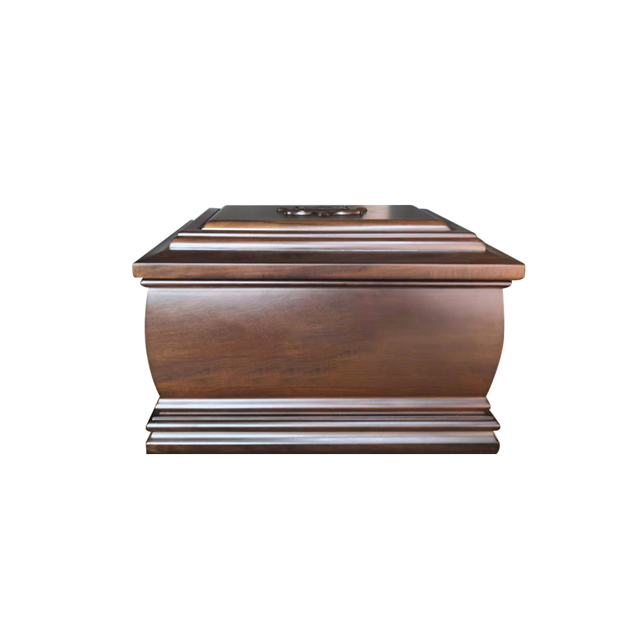
The metal category encompasses several distinct alloys, each with specific weights, costs, and physical properties. Brass is an alloy of copper and zinc. It is heavy, traditional, and highly workable, allowing for intricate surface etching and deep engraving. Aluminum offers a lightweight alternative to brass without sacrificing structural integrity. It makes the vessel easier to handle and transport, and it costs significantly less to manufacture.
Stainless steel and bronze serve as the all-around champions for maximum durability. Stainless steel (typically 304 grade) resists rust and corrosion naturally, making it ideal for humid coastal environments. Cast bronze commands a premium price due to the complex foundry work required. It delivers an heirloom-quality weight and a finish that develops a rich, natural patina over decades of display.
Metal cremation urns deliver superior durability and dent-resistance compared to any other material on the market. They easily survive drops and blunt impacts that would shatter ceramic or deeply gouge wood. This ruggedness provides peace of mind for families planning to move frequently or those with active households.
The closure mechanisms are highly secure. Metal vessels typically utilize precision-threaded, screw-on lids. This mechanical seal locks the lid tightly to the body of the vase. It eliminates the need for messy adhesives, allowing the family to open and close the vessel multiple times if they plan to scatter a portion of the ashes at a later date or divide them among family members.
Despite their inherent strength, metals face specific environmental risks. Oxidation, tarnishing, or pitting occurs over time, particularly in humid environments where salt air accelerates corrosion. Brass is especially susceptible to tarnishing if left unprotected, turning a dull brown or green as it reacts with oxygen.
To combat this, manufacturers rely on clear-coat finishes, baked enamels, and heavy layers of polyurethane paint to protect the raw metal and promote longevity. These coatings act as a barrier against moisture and oxygen. However, scratching these protective coats compromises the entire vessel. If a sharp object gouges through the clear coat, the exposed metal underneath quickly begins to oxidize, spreading rust or tarnish beneath the remaining paint and causing it to flake off.
The precision of the cremation urn manufacturer matters immensely when dealing with metal. Poorly machined threads lead to cross-threading, resulting in unsealable lids that sit crookedly on the vase. High-quality manufacturing ensures the threads glide smoothly and lock down tight without binding or squeaking.
Metal presents severe limitations for air travel due to TSA x-ray opacity. If you plan to fly with the ashes, you must either ship the metal vessel separately via a parcel carrier or choose a temporary travel container. You can then transfer the ashes into the metal vessel upon reaching your final destination.
Ceramic encompasses several distinct categories based on clay composition and firing temperatures. Standard fired earthenware offers a rustic, porous finish often used for temporary or biodegradable applications. High-fire porcelain provides a delicate, translucent quality with exceptional hardness, fired at temperatures exceeding 2,300°F. Stoneware delivers dense, heavy durability suitable for long-term display.
Glazes completely transform the raw clay. The high-temperature firing process melts silica compounds into a glass-like coating. This creates a non-porous, waterproof exterior that protects the underlying clay body from moisture absorption, stains, and environmental degradation.
Ceramic cremation urns are completely impervious to rust, oxidation, and organic rot. Unlike metal, they never tarnish. Unlike wood, they never warp or attract pests. Once fired, the material remains chemically inert and stable indefinitely.
They offer immense aesthetic value. Unique, hand-thrown designs and unpredictable Raku firing techniques create one-of-a-kind finishes. Raku firing pulls the piece from the kiln while glowing hot and places it in combustible material. This thermal shock creates random, beautiful metallic flashes and crackle glazes that cannot be replicated in mass production.
Ceramic can be molded into non-traditional, sculptural, and highly organic shapes. Artisans craft vessels that look like teardrops, blooming flowers, or abstract geometric forms. This allows for deeply personal memorial art that does not immediately look like a traditional funeral product.
The primary drawback of ceramic is its extreme fragility. It carries a catastrophic shatter risk if dropped from even a low height. A single bump from a vacuum cleaner or a curious pet reduces a beautiful memorial to sharp shards, exposing the ashes inside. This fragility requires careful placement and handling at all times.
Closure presents a distinct mechanical challenge. Ceramic lids cannot be threaded during the throwing process with enough precision to create a screw-on cap. Instead, they rely on loose friction fits, where the lid simply rests inside the neck of the vase. To achieve a secure seal, you must apply a continuous bead of clear silicone sealant or permanent two-part epoxy around the inner rim before setting the lid in place.
We recommend ceramic primarily for secure, low-traffic indoor display. Place them on deep, stable shelves away from edges, walkways, pets, and children. They also serve perfectly for permanent placement inside a glass-front columbarium niche. In a niche, the visual appeal of the glaze is paramount, and the physical risks of dropping or bumping the vessel drop to zero once the facility locks the glass door.
The chosen material heavily dictates the final form of the memorial. Metal excels at dignified, traditional vase shapes. The metal spinning and casting processes naturally lend themselves to tall, cylindrical forms with flared bases and narrow necks. Wood offers elegant, warm rectangular chests. The flat panels and sharp 90-degree angles showcase the natural grain and provide large canvases for engraving. Ceramic provides artistic, non-traditional sculptural forms. The plasticity of wet clay allows artisans to break free from standard geometry and create flowing, organic shapes.
Ongoing care requirements differ drastically across the three materials. Wood requires the most active maintenance. You must dust it regularly and occasionally apply a high-quality furniture oil or wax to prevent the grain from drying out and cracking. Painted or clear-coated metal requires a gentle touch. Use only a non-abrasive microfiber cloth to wipe away dust, avoiding chemical cleaners that strip the protective clear coat. Ceramic requires the least maintenance. The glass-like glaze repels dust and dirt, requiring only a simple wipe-down cleaning with a damp cloth to restore its original shine.
We rank the materials by closure security to help you understand the risk of accidental spills. Metal ranks highest due to precision threaded lids that lock mechanically. Wood ranks high, utilizing mechanical screwed panels that hold firmly against the frame. Ceramic ranks lowest in native security. The glued lid's effectiveness is highly variable and depends entirely on the user's correct application of epoxy or silicone during the transfer process.
Wood allows for deep, direct engraving capabilities. Lasers burn text and images directly into the fibers. Metal supports surface etching or mechanical embossing, though heavily painted metals chip if engraved improperly. Ceramic presents significant personalization challenges. You cannot easily engrave finished ceramic without cracking the glaze. Personalization typically requires a secondary hanging metal nameplate draped around the neck of the vase, or a custom cremation urns pre-firing commission where the artisan integrates the text into the wet clay before applying the final glaze.
Material | Durability & Impact Resistance | Closure Security | TSA Travel Compliance | Best Placement Scenario |
|---|---|---|---|---|
Wood | High (Dents but rarely shatters) | High (Bottom screws) | Excellent (X-ray transparent) | Home display, TSA travel |
Metal | Maximum (Highly dent resistant) | Maximum (Threaded lid) | Poor (Opaque to X-ray) | High-traffic home, Burial (in vault) |
Ceramic | Low (Catastrophic shatter risk) | Variable (Requires epoxy) | Good (If non-leaded glaze) | Glass columbarium, Low-traffic shelf |
Buyers must carefully measure and verify internal volume before completing a purchase. The internal space must match the 200 cubic inch requirement for standard adult cremation urns. External bulk is highly deceptive. Thick wooden walls, heavy ceramic bases, or decorative metal flourishes make the vessel look large on the outside while offering very little internal storage space. Always check the manufacturer's listed cubic inch capacity rather than relying on external dimensions to gauge size.
Evaluate the supplier before purchasing to avoid receiving defective memorial products. Look for a comprehensive warranty on paint and clear-coat finishes, ensuring the metal will not peel within a year. Check for clear return policies. You need immediate recourse if you receive a metal vessel with cross-threaded lids that refuse to close. Verify secure shipping practices. Fragile ceramics require specialized, custom-molded foam packing to survive the transit process without arriving in pieces.
Understand the practical realities of transferring ashes before selecting a shape. The cremains remain inside a thick, sealed plastic poly bag provided by the crematorium, usually secured with a heavy zip tie. Bottom-loading wooden chests accommodate this entire bag easily. You simply remove the bottom panel, place the sealed bag inside, and replace the screws. Narrow-necked metal or ceramic vase shapes present a challenge. The opening is often too small for the bag. This requires you to open the plastic bag and funnel the loose ashes inside, which is an emotionally difficult and messy process for the family.
Confirm the exact cubic inch capacity requirement with your funeral director based on the individual's healthy body weight before making a purchase.
Measure the exact interior dimensions of your intended columbarium niche to ensure the selected vessel fits perfectly without overhanging the edge or blocking the door hardware.
Select wood or non-leaded ceramic if you plan to transport the ashes via commercial airline to avoid TSA rejection at the security checkpoint.
Purchase a rigid outer burial vault if you intend to place the vessel in the earth, regardless of the primary material you choose.
Apply a high-quality silicone sealant or two-part clear epoxy to unthreaded ceramic lids to guarantee the permanent security of the internal contents.
A: Yes, but they naturally decompose over time unless placed inside a sealed, waterproof urn vault. Most cemeteries require a concrete or polymer vault for earth burials regardless of the urn material. This prevents ground collapse as the container degrades and protects the ashes from soil acidity and groundwater.
A: High-quality metal urns receive a protective clear coat, baked enamel, or polyurethane paint to prevent tarnishing and promote longevity. However, if this coating scratches or faces high humidity for prolonged periods, materials like brass oxidize and turn a dull brown or green.
A: Generally, yes. Standard ceramic and porcelain pass successfully through TSA dual-energy x-ray scanners. However, lead-lined ceramics or urns with heavy metallic glazes block the scanner. This results in immediate rejection at the security checkpoint, forcing you to abandon the item or miss your flight.
A: Because ceramic lids lack precision threads, they require a strong adhesive for a permanent seal. Apply a continuous bead of clear silicone sealant or two-part epoxy around the inner rim of the lid using a toothpick or small brush before setting it firmly in place.
A: The general industry rule dictates one cubic inch of space for every one pound of healthy body weight. Therefore, a standard adult urn holds approximately 200 to 220 cubic inches to ensure adequate capacity for the remains following the mechanical processing at the crematory.
A: Yes. The ashes arrive in a sealed plastic poly bag from the crematorium. For wide-opening wooden or metal urns, you simply place the sealed bag directly inside. For narrow-necked designs, you must open the bag and use a wide-mouth funnel to transfer the ashes carefully.


