
Views: 0 Author: Site Editor Publish Time: 2026-06-08 Origin: Site
Hospitals and large healthcare facilities face a compounding challenge today. Rising off-site disposal fees and tightening liability around biohazardous transport create massive administrative burdens. Relying solely on external haulers leaves your organization vulnerable to unpredictable changes and strict contract limitations. For facilities generating high volumes of infectious or pathological waste, finding a permanent, secure alternative is absolutely critical. Transitioning to on-site destruction requires a significant capital investment upfront. However, it offers uncompromising, long-term control over your entire waste stream. This guide provides a direct, evidence-based framework for evaluating your facility's readiness for such an upgrade. We cover technical specifications, core equipment choices, and strict regulatory realities in detail. You will learn how to assess your daily volumes effectively. We will help you understand if bringing disposal in-house is a viable operational decision for your team.
Volume dictates viability: On-site medical waste treatment is typically only cost-effective for facilities generating sufficient daily waste volumes to offset capital and permitting costs.
Compliance is the highest hurdle: Modern hospital incinerators must feature advanced secondary chambers and emission scrubbers to meet stringent EPA and local air quality standards.
TCO extends beyond the machine: True costs include specialized operator training, secondary ash disposal, fuel consumption, and periodic refractory lining replacement.
Technology matching: Selecting the right clinical waste burner requires aligning daily batch capabilities (kg/hr) with your specific waste profile (pathological, sharps, infectious, trace chemo).
Relying entirely on third-party haulers introduces variable pricing into your daily operations. It also locks your facility into long-term vendor contracts that often feature rigid pickup schedules. Transporting red-bag materials off-campus carries continuous "cradle-to-grave" liability risks. You remain legally responsible for these hazardous materials while they travel down public highways. Moving to an on-site medical waste treatment system changes this dynamic entirely.
To justify this operational shift, you must evaluate several distinct success criteria. Adoption makes sense only under specific facility conditions. Consider the following benchmarks before moving forward:
Volume Thresholds: You must calculate your facility's daily burn requirement in kilograms per day. High daily generation rates justify the major equipment investment. Low volumes often fail to offset the continuous operational resources required to run the machinery efficiently.
Risk Mitigation: Processing materials on-campus eliminates external chain-of-custody risks. You never have to worry about vehicular accidents during transport. Your own trained staff handles the destruction process from start to finish within a secure perimeter.
Energy Recovery Potential: Some modern units feature advanced heat recovery systems. We refer to this as waste-to-energy conversion. Evaluating these systems helps determine if you can offset facility utility consumption. Capturing steam or hot water provides measurable operational benefits over the life of the machine.
Many administrators mistakenly view disposal as a simple utility service. However, treating it as an internal infrastructure capability grants hospitals unprecedented autonomy. You dictate the processing schedule, manage the security protocols, and eliminate external transit variables.
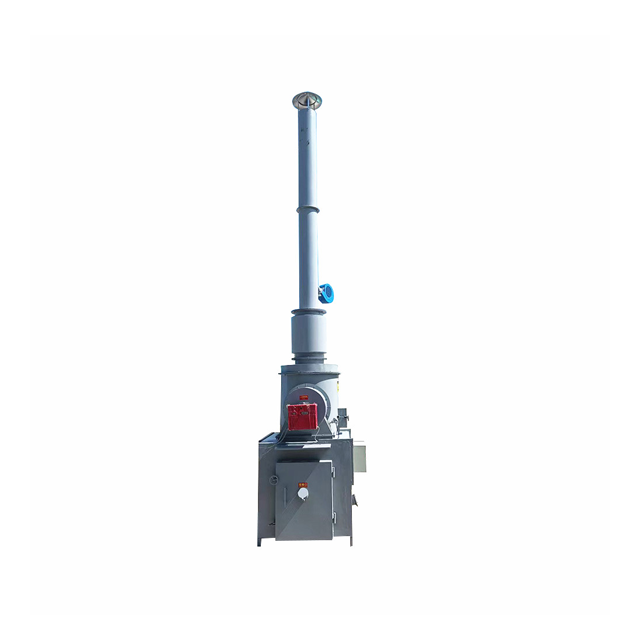
When evaluating hazardous waste equipment, you must understand the available engineering solutions. The market offers several distinct technology categories. Each serves a specific operational scale and application type. Choosing the wrong category leads to severe operational bottlenecks.
Dual-Chamber (Controlled Air) Incinerators: These represent the industry standard for modern hospitals. The primary chamber operates in a starved-air environment. It restricts oxygen to create a combustible gas from the solid materials. The secondary chamber then burns this resulting gas at extreme temperatures. This two-step process effectively destroys volatile organic compounds (VOCs). It provides a clean, highly controlled burn.
Rotary Kilns: These units are best for continuous, massive-scale operations. Regional shared-service centers often rely on them. A rotating cylindrical chamber constantly turns the materials inside. This tumbling action ensures uniform combustion for massive daily volumes. They require substantial footprint space and heavy-duty dedicated infrastructure.
Portable/Containerized Units: Manufacturers design this high-mobility equipment for temporary deployments. Remote clinics and emergency response scenarios benefit greatly from them. They fit seamlessly inside standard shipping containers for rapid transport. They offer a flexible alternative when building permanent infrastructure is impossible.
Here is a simplified chart comparing these core technologies:
Comparison Chart: Core Equipment Categories | |||
Technology Type | Primary Use Case | Combustion Method | Operational Scale |
|---|---|---|---|
Dual-Chamber | Standard Hospitals | Controlled Air / Gasification | Medium to Large |
Rotary Kiln | Regional Centers | Continuous Rotation | Massive / Industrial |
Containerized | Remote Clinics / Emergencies | Mobile Dual-Chamber | Small to Medium |
You must also decide between manual batch loading and continuous feed systems. Manual batch loading suits smaller clinical setups perfectly. Operators load materials into the cold chamber before initiating the burn cycle. Conversely, automated continuous feeding systems are essential for major urban hospitals. They safely introduce materials into the active burn chamber without exposing operators to dangerous heat or blowback.
Selecting a hospital incinerator requires careful technical alignment. You cannot simply purchase an off-the-shelf unit based on a brochure. You must match the machinery directly to your specific daily realities. Keep these critical evaluation dimensions in mind:
Temperature and Retention Time: Complete pathogen destruction is non-negotiable. Verify the secondary chamber maintains temperatures between 850°C and 1100°C (1562°F to 2012°F). It must also guarantee a minimum 2-second gas retention time. This ensures the absolute vaporization of harmful particles.
Throughput Capacity: Match the machine's burn rate to your peak generation times. A medical waste incinerator rated for 50 kg/hr behaves very differently than a 300 kg/hr model. Undersized units cause dangerous facility backlogs. Oversized units waste expensive auxiliary fuel.
Waste Profile Compatibility: Ensure the equipment matches your exact material mix. Pathological waste contains unusually high moisture levels. Standard red bags often contain massive plastic volumes. Your machine must be tuned for your dominant profile to prevent heavy black smoke.
Automated De-ashing and Loading: Operator safety remains paramount. Assess features designed to limit human exposure. Automated rams push materials inside safely. Conveyor systems remove bottom ash without requiring manual shoveling. These mechanical systems protect workers from biohazards and extreme thermal stress.
Regulatory compliance represents your highest hurdle during adoption. Authorities place incredibly strict environmental scrutiny on any combustion equipment. You must navigate these complicated rules carefully before breaking ground.
The regulatory framework dictates strict operational limits. The EPA sets rigorous guidelines in the United States. Other global regions maintain equivalent health department mandates. They monitor stack emissions continuously to protect public air quality. Failing to meet these standards results in severe penalties or immediate operational shutdowns. Authorities demand transparency and frequent reporting.
Flue Gas Treatment (FGT) systems are essential abatement add-ons. You cannot operate legally without them in modern jurisdictions. The exhaust gas requires thorough, multi-stage cleaning before entering the atmosphere. You must evaluate several FGT options. Wet scrubbers spray liquid to capture heavy particulates and neutralize harsh acids. Dry scrubbers inject alkaline powders to react with harmful gases chemically. Baghouse filters trap fine microscopic dust and heavy metals effectively. These combined systems capture dangerous dioxins and furans before they escape the stack.
Permitting timelines require realistic expectations from your leadership team. Securing air quality permits takes considerable time and patience. Zoning approvals often face unexpected community pushback. The bureaucratic process usually takes much longer than manufacturing the equipment itself. Planning for a 12-to-18-month administrative window is a standard industry best practice. Rushing this phase often leads to costly redesigns.
Bringing a new unit online involves extensive logistical coordination. You must prepare the site meticulously. Engineering requirements dictate specific concrete pad thicknesses to support the massive equipment weight. You must route fuel lines safely across the property. Your team must choose between natural gas or diesel connections based on local availability. Furthermore, exhaust stack height clearances must meet local building codes to ensure proper gas dispersion away from air intake vents.
Hidden operational factors demand your continuous attention. Fuel consumption rates fluctuate widely based on your daily load. Pre-heating the secondary chamber requires significant auxiliary energy before you burn a single bag. Firing burners to maintain temperatures during low-energy waste batches also consumes extra fuel. You must account for these daily consumption variables when planning your facility budget.
Disposal costs for bottom ash remain a constant reality. Combustion reduces waste volume dramatically, but it always leaves sterile ash behind. This byproduct may still require specialized landfill disposal depending on heavy metal concentrations. Local laws dictate exactly how you classify, store, and discard this remaining material.
Maintenance and specialized expertise keep the system running safely. The internal refractory bricks degrade over time. Extreme thermal cycling causes cracking and spalling along the chamber walls. You will need to replace this protective lining periodically. Furthermore, you cannot rely on standard facility maintenance staff to run the machine. The reality of daily operation necessitates hiring or training certified boiler operators. Operating this advanced equipment safely requires dedicated, specialized personnel.
Choosing a manufacturer for your clinical waste burner requires strict and methodical vetting. Do not select a partner based on brochure specifications or basic price tags alone.
Vendor vetting involves several key steps. First, demand a Factory Acceptance Testing (FAT) protocol. You want to see the machine operate under load before taking delivery. Second, verify the availability of local maintenance networks. A highly advanced machine fails quickly without regional parts support and responsive technicians. Third, evaluate their track record with environmental compliance in your specific region. Experienced vendors know exactly how to navigate local regulatory boards smoothly.
Your immediate next step should be a pilot audit. Conduct a comprehensive waste stream audit before requesting formal equipment quotes. Weigh and categorize your generated materials for 30 consecutive days. Separate pathological items, sharps, standard infectious bags, and trace chemotherapy elements. Accurate daily data ensures you purchase the correct machine capacity. Guessing your volume leads directly to severely mismatched equipment and operational frustration.
An on-site destruction system acts as a permanent, facility-altering infrastructure upgrade. It directly shifts the burden of compliance and daily operation from third-party vendors to the hospital administration. You take full, uncompromising control of your internal processes.
While this equipment offers unmatched autonomy, it requires serious institutional commitment. It eliminates transit liabilities completely and stabilizes long-term processing workflows. However, the decision rests entirely on balancing your actual daily volumes against necessary capital requirements and strict local environmental regulations.
Start your evaluation today. Gather your internal stakeholders and begin your comprehensive waste stream audit. Define your true baseline accurately, evaluate your available footprint, and partner with experienced engineers to design a fully compliant solution.
A: Complete pathogen destruction requires specific thermal conditions. The primary chamber usually operates between 750°C and 850°C to gasify solid materials. The secondary chamber must reach temperatures between 850°C and 1100°C (1562°F to 2012°F) with a 2-second retention time to safely destroy volatile organic compounds and prevent harmful emissions.
A: No. While they handle infectious, pathological, and sharps waste perfectly, strict limitations exist. You cannot safely incinerate radioactive materials, pressurized aerosol containers, or waste containing high concentrations of heavy metals (like mercury or lead). These items require entirely different, specialized disposal methods to prevent dangerous atmospheric release.
A: Yes. Modern environmental standards universally mandate secondary combustion chambers. Furthermore, almost all jurisdictions now require additional Flue Gas Treatment (FGT) systems. Depending on local laws, you will likely need to install wet scrubbers, dry scrubbers, or baghouse filters to capture dioxins and heavy particulates before stack release.
A: The entire process typically takes 6 to 18 months. Manufacturing the unit takes only a fraction of this time. Regulatory permitting is the primary bottleneck. Securing air quality permits, passing environmental impact studies, and gaining local zoning approvals demand significant administrative time before physical installation can even begin.
